Insan Evreni (Microcosm)
Writer & Rules Designer
Insan Evreni (Microcosm) is a setting where a human body is a planet called Gaia. Its organs are island countries and its cells are the people who live there. The studio name InEv comes from the first two letters of each word.
I am the project’s storyteller and I wrote all of its text. Osman Karakuş is my co-founder and the project’s coordinator. Kübra Çakır worked on the universe with us before she left the project. Uygar Anıl drew the illustrations.
Read The Frontalis Family (PDF) · Download
Version 0.1 (2023). 64 pages, 65 MB.
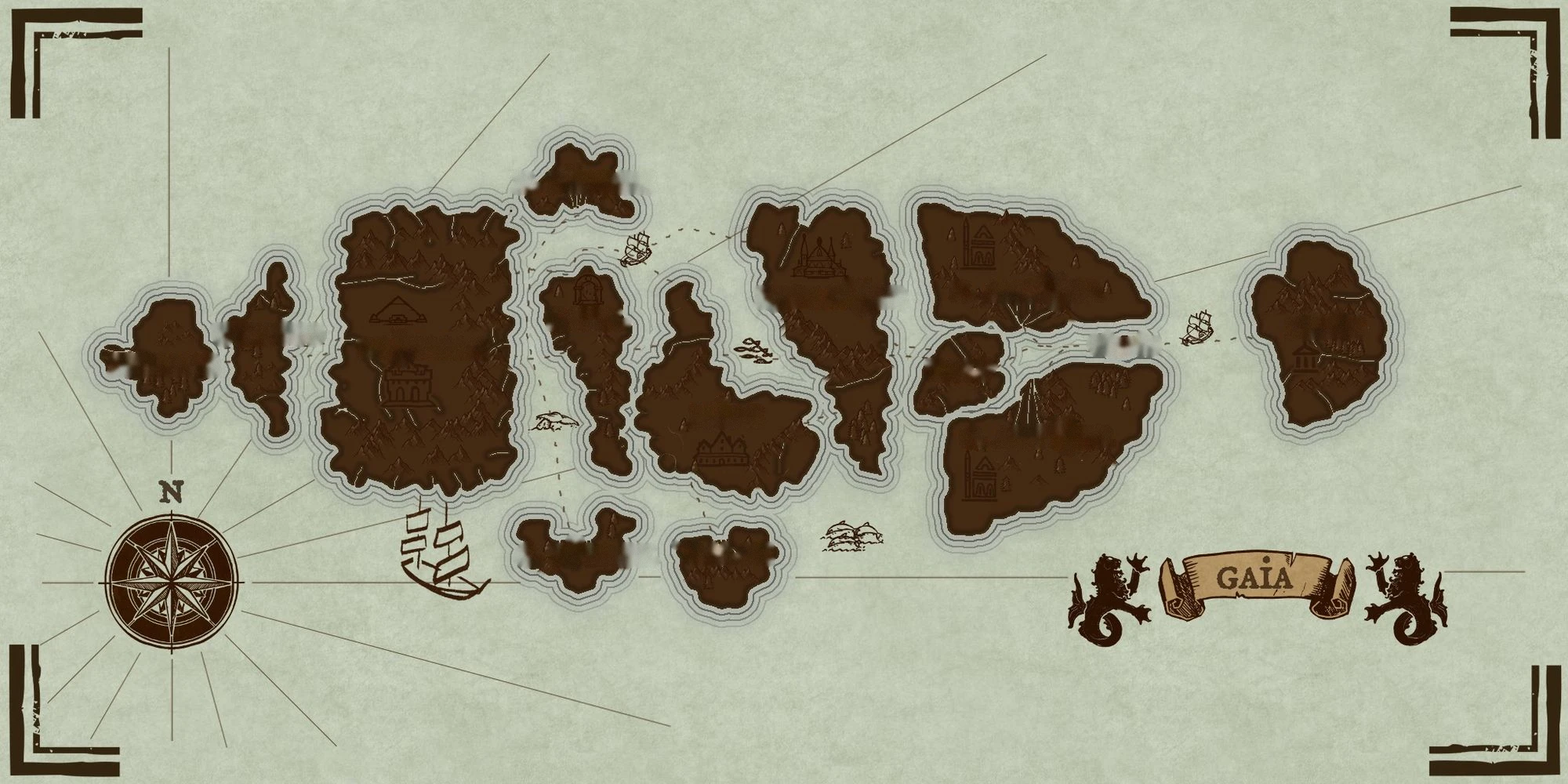
The illustrated book and worldbuilding
 The Frontalis Family, the 64-page FATE introduction.
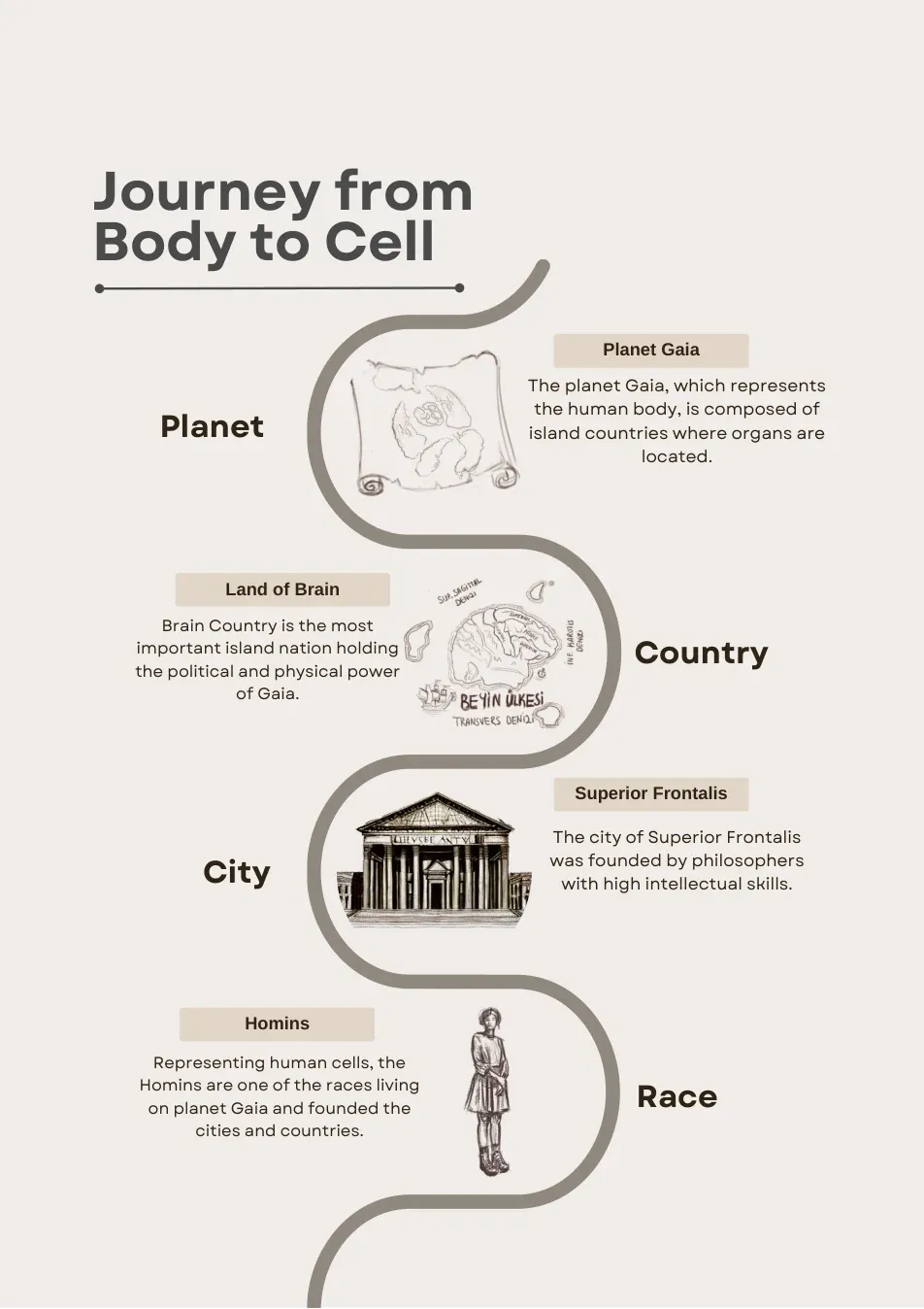 From body to cell: the setting structure, from the English presentation.
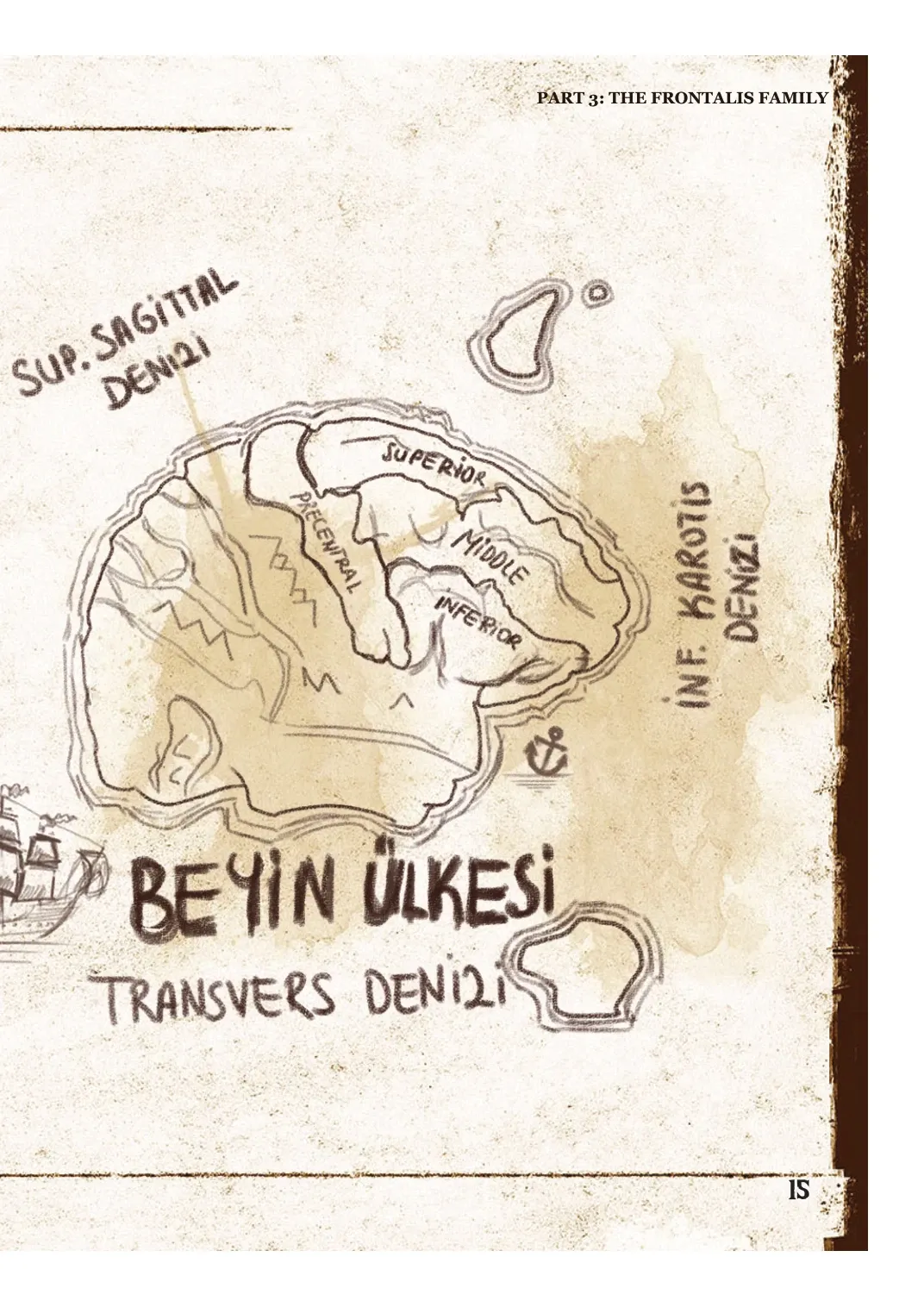 Brain Country, page 15. The surrounding waters are the Superior Sagittal Sea, Inferior Carotid Sea and Transverse Sea.
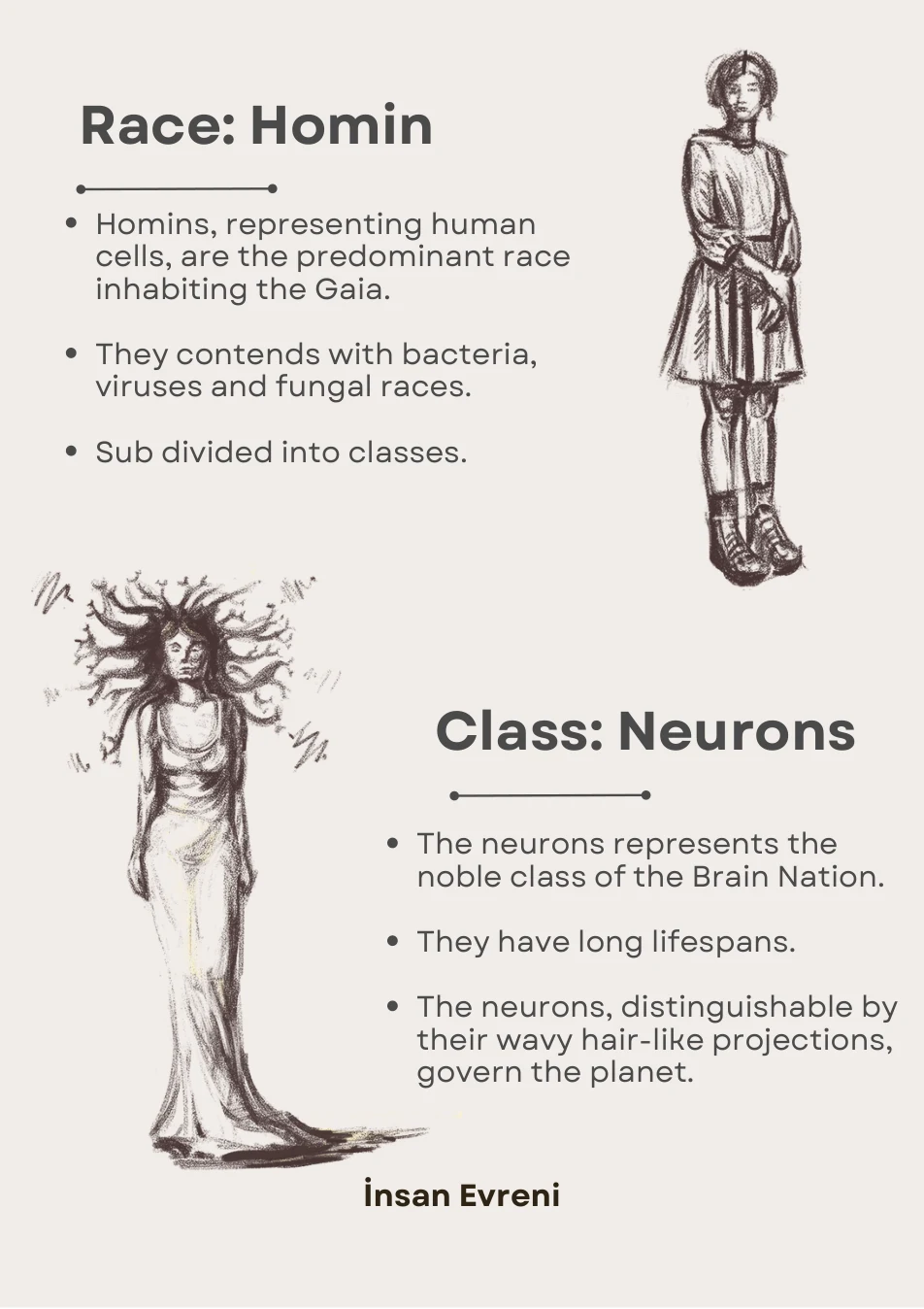
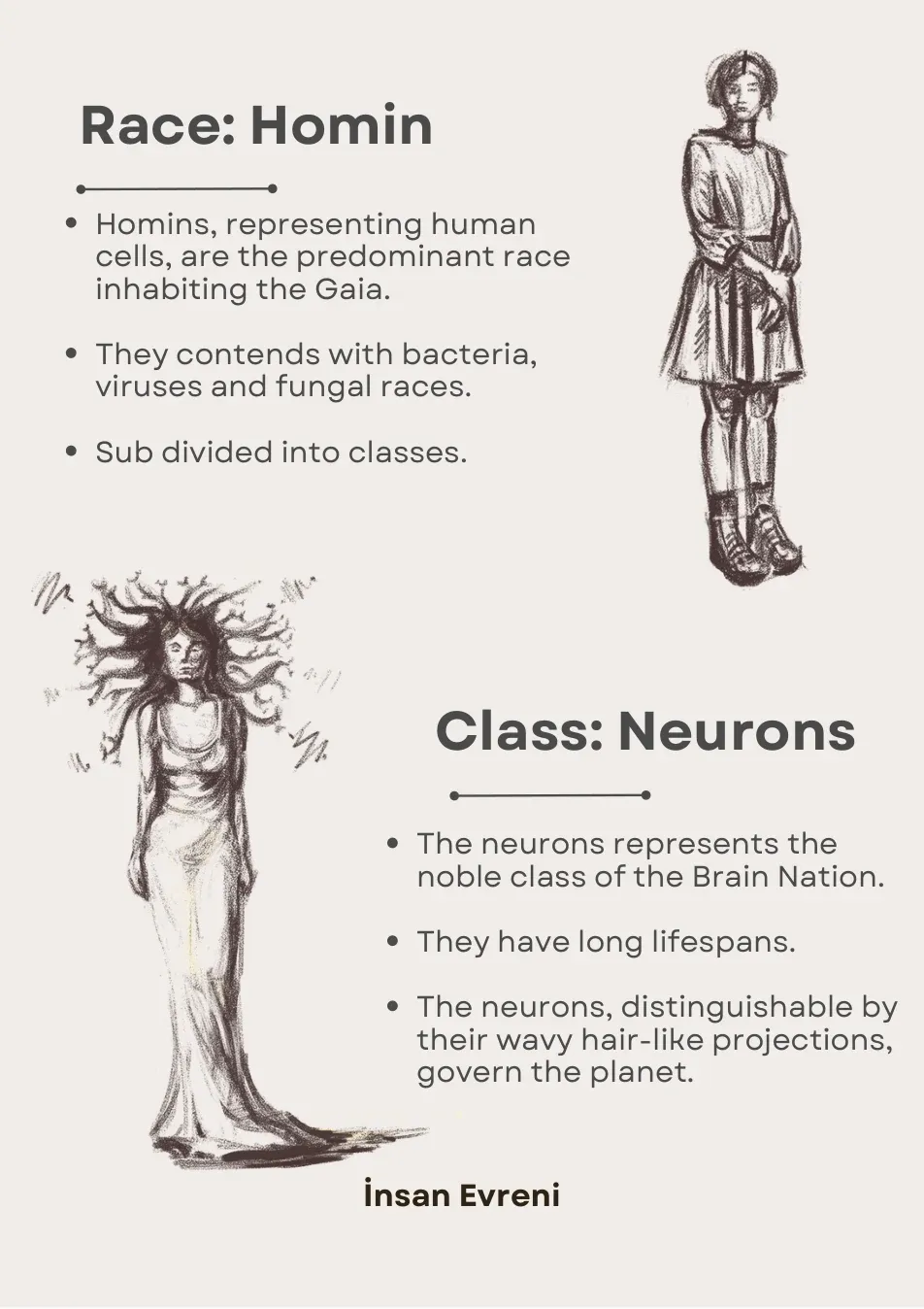 Homin and neurons, from the English presentation.
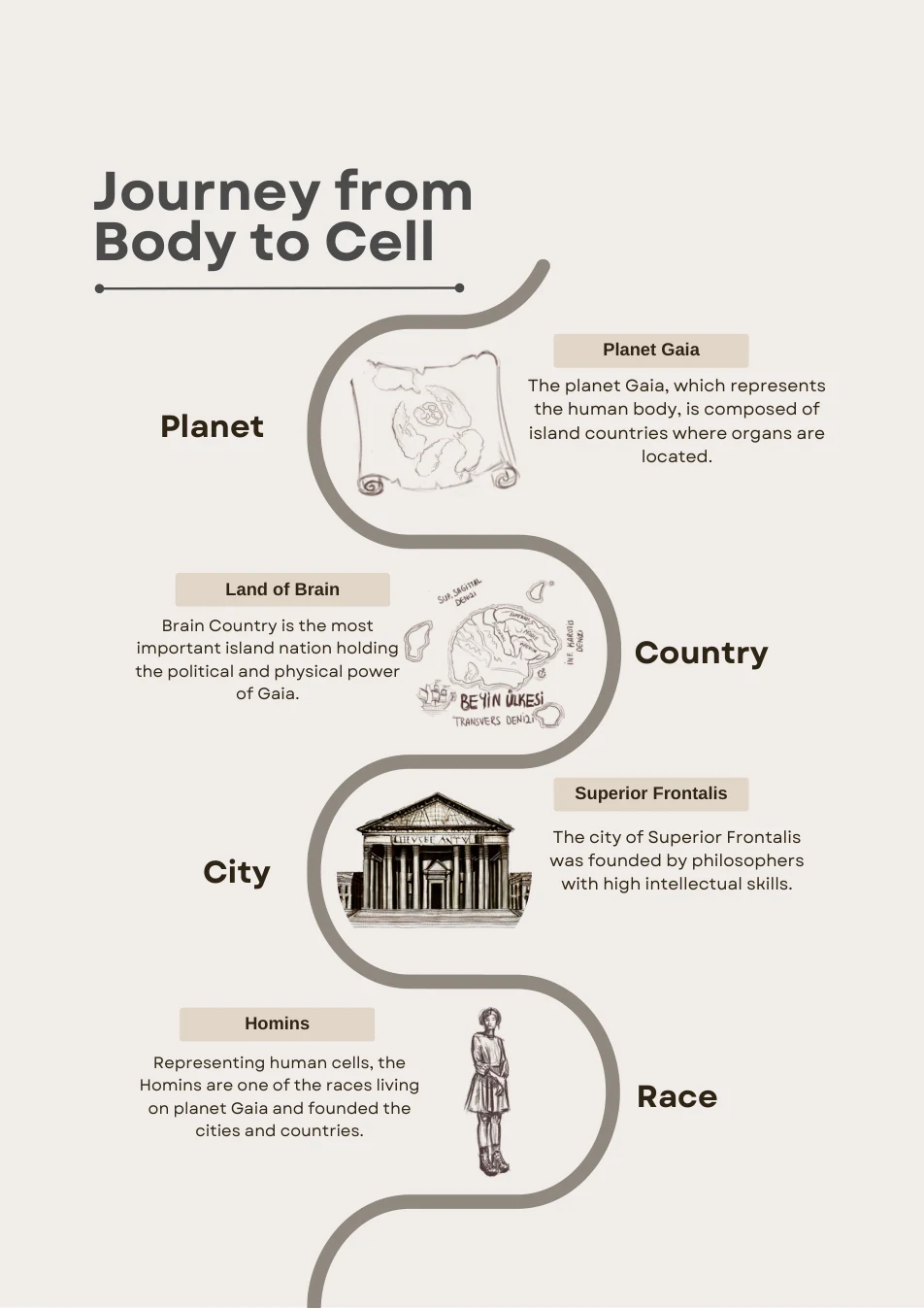
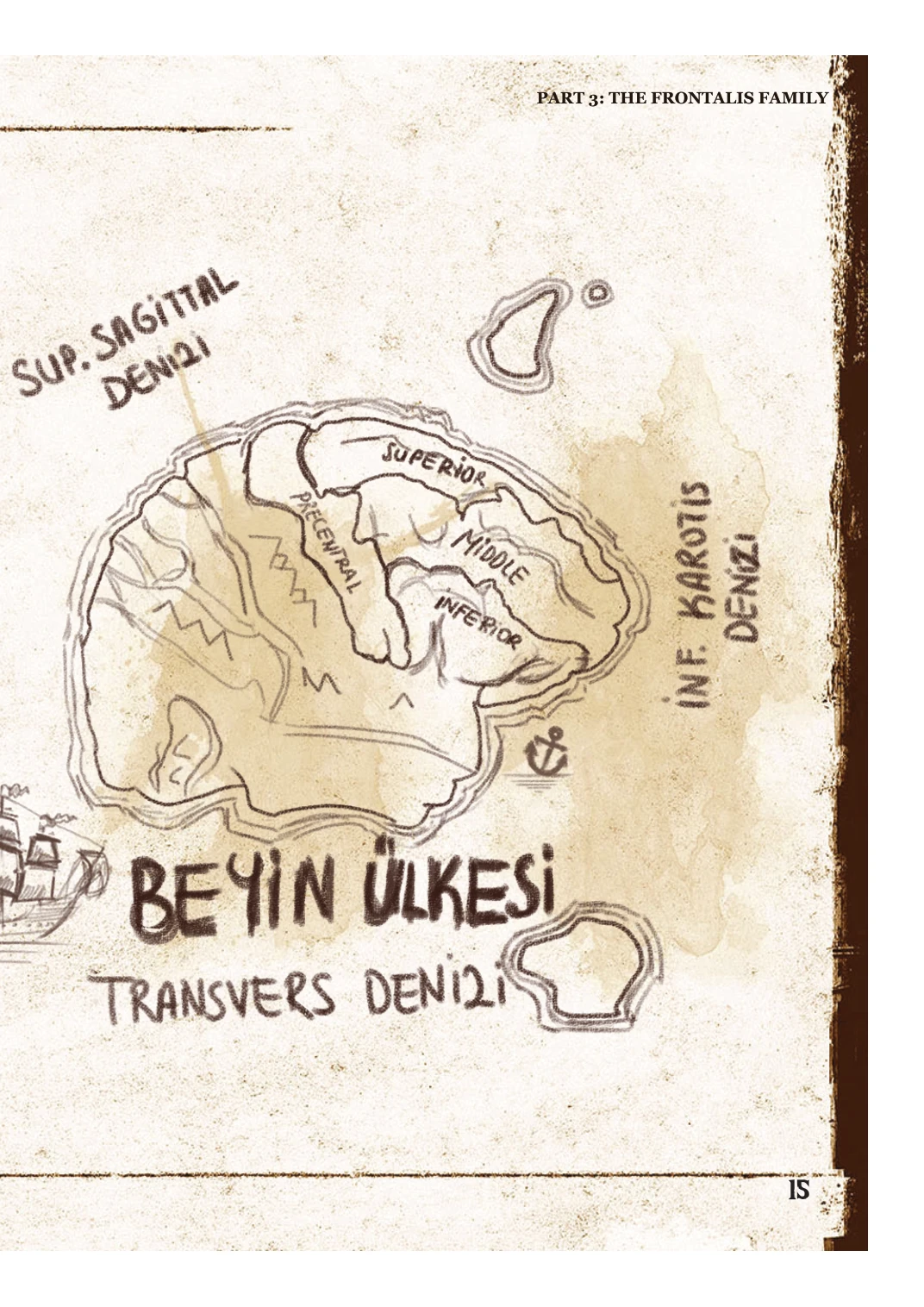
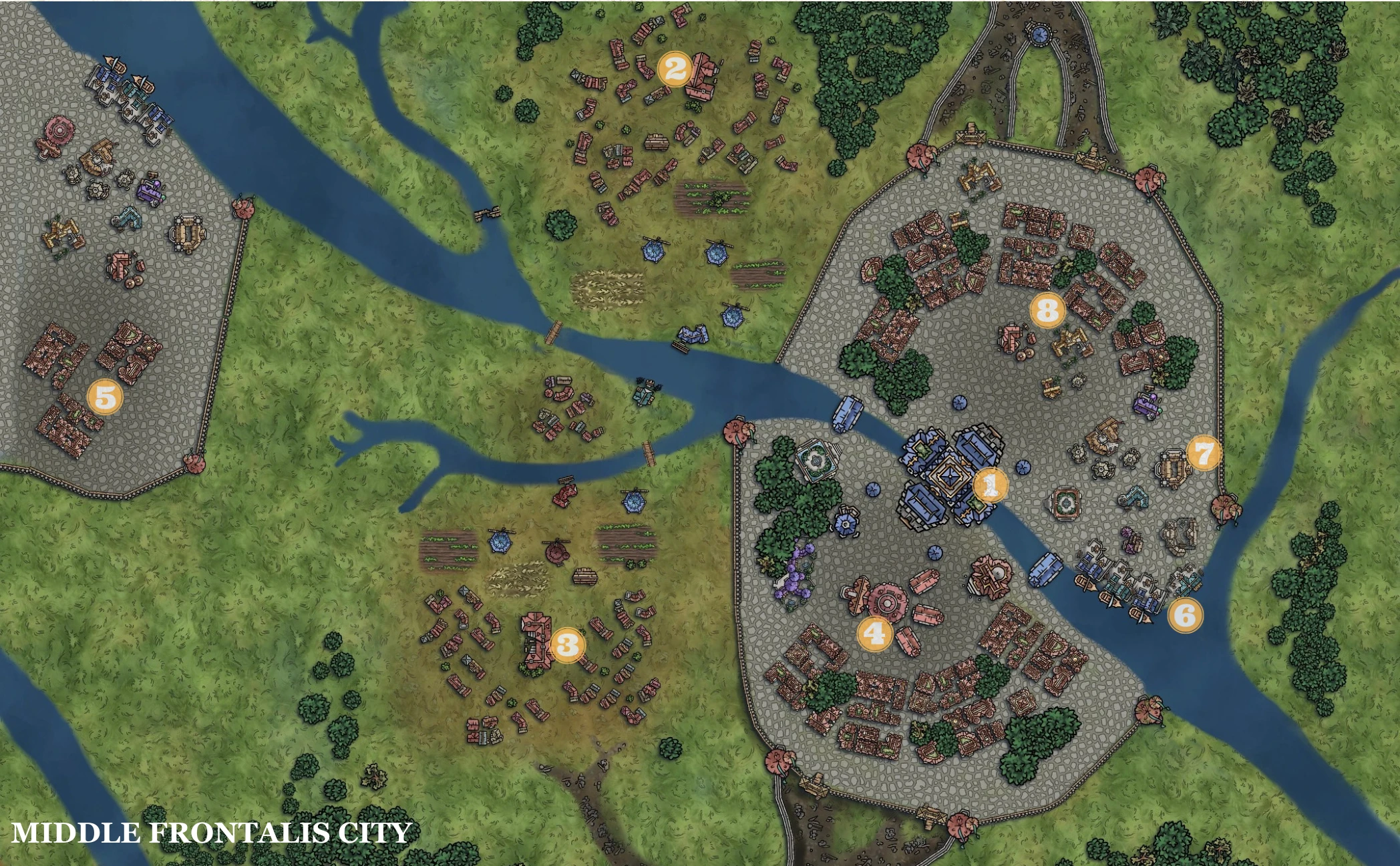
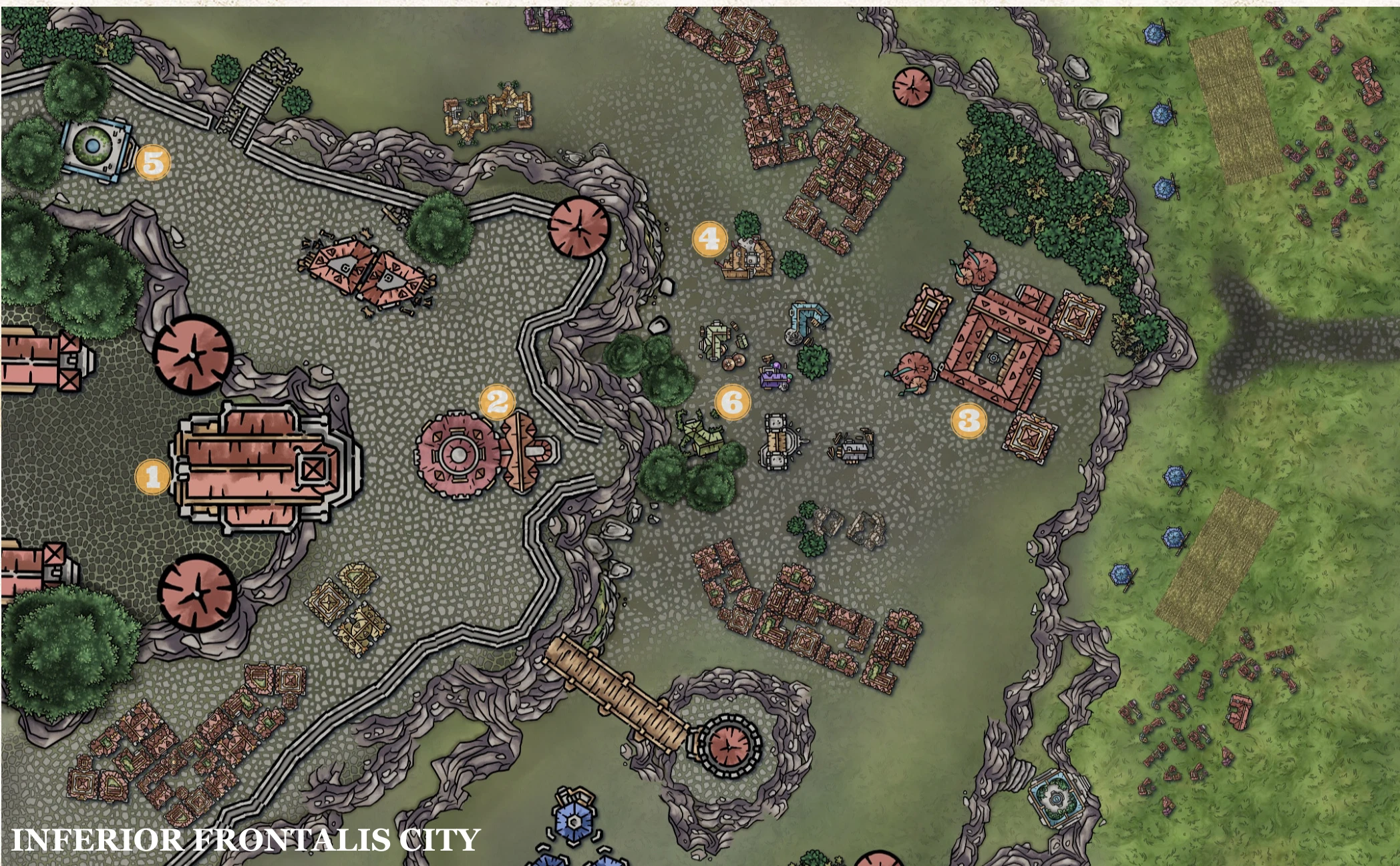
Illustrations by Uygar Anıl. Hand-lettered map labels are retained, with their English names in the captions. Click any preview to enlarge it.
| In the body | In the world |
|---|---|
| Organs | Fifteen island countries. The Brain rules the planet through eight families. |
| Neurons, astrocytes and microglia | The nobles, the labourers and the security force of the Brain. |
| Immune cells | A winged navy. Neutrophils are its vanguard and B lymphocytes are its archers. |
| Bacteria, viruses and fungi | The other three races, known as the Latecomers. |
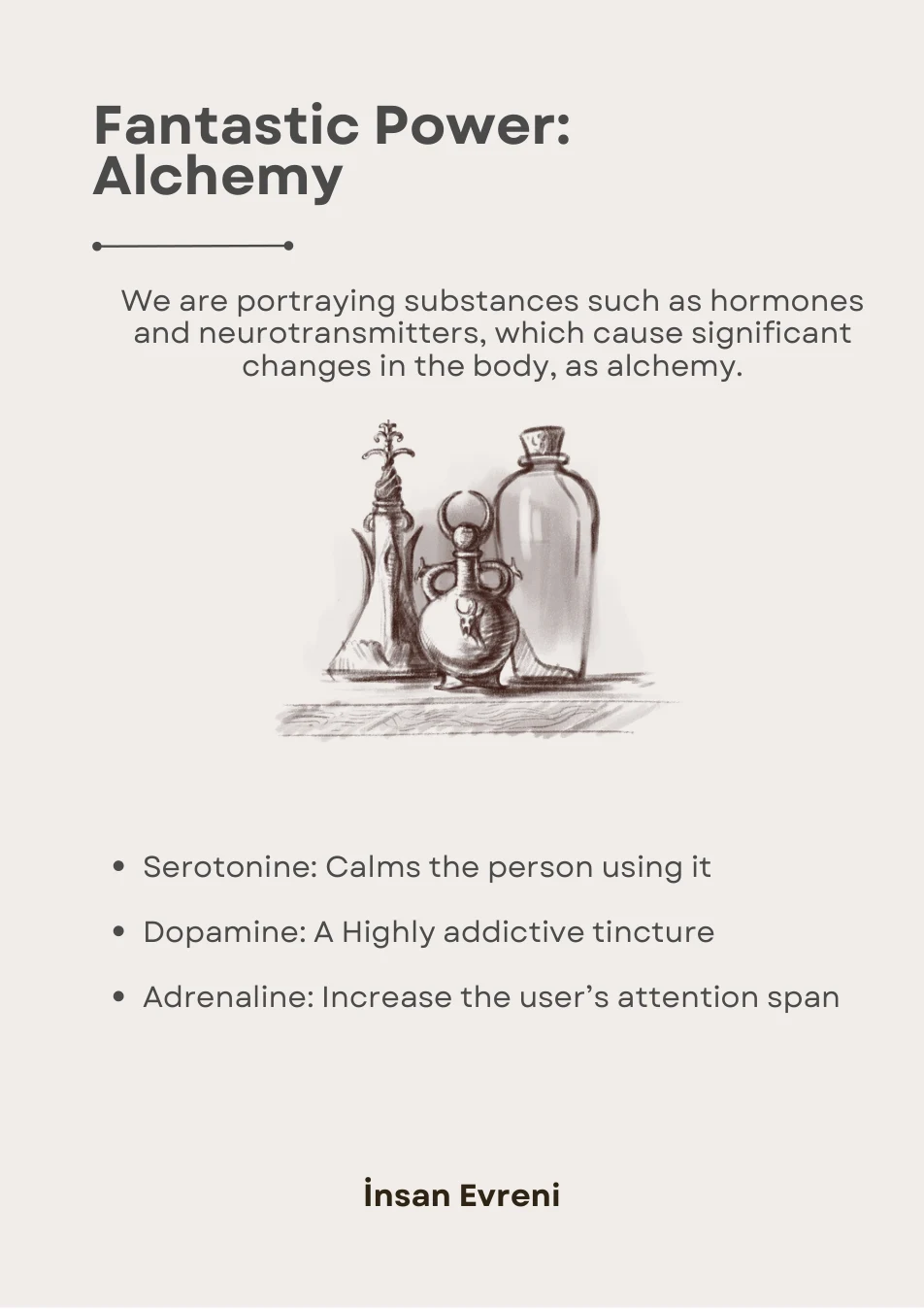
| Hormones | The seasons. Summer is insulin and winter is glucagon. |
| ATP, ADP and AMP | The coins. |
| Drugs | Holy relics. Morphine, amphetamine and diazepam are objects of faith. |
| A heartbeat | One hour, measured by a whirlpool in the Heart. |
The first book, The Frontalis Family, is a 64-page introduction for FATE Condensed, released as version 0.1 in 2023. It covers Gaia, the Brain and the four Frontalis cities, with enemies and NPCs written as FATE characters.
Rules I designed for it
The handbook draft adds rules of my own to FATE. The main one is a cancer track with four grades. A character who takes a grade gets stronger and pays for it for the rest of the game.
| Grade | Permanent aspect | Cost | Gain |
|---|---|---|---|
| 1 | “First-grade cancer.” | Coughing fits, −2 to social rolls | +2 Physique |
| 2 | “There is a visible deformation in my body.” | −2 to social rolls | +2 Agility |
| 3 | “My mental control is slipping.” | Paranoia, −2 to mental rolls | +2 Stealth, and once a day the character slips past defence cells |
| 4 | “I am on the edge of losing control.” | The character has to hide their body, −2 to mental rolls | +2 Physique and Agility, and a move that is close to teleporting |
A character fills a cancer box in two ways. They can clear three filled stress boxes into one cancer box. They can also use a rule called Defy Fate: the player spends one fate point and fills one cancer box to do something the story would forbid, such as breaking an oath. After the fourth grade the player retires the character, who stays in the world and can return as an enemy.
The handbook puts the question to the player this way:
What are you ready to give up so the story can move one step further?
Gaia has no magic. Alchemists combine amino acid stones in a fixed order, and each mixture is a FATE aspect with a recipe. Making one would normally take three rolls, for knowledge, ingredients and craft. I folded them into one skill, Alchemy.
Scenario: Rise and Dream
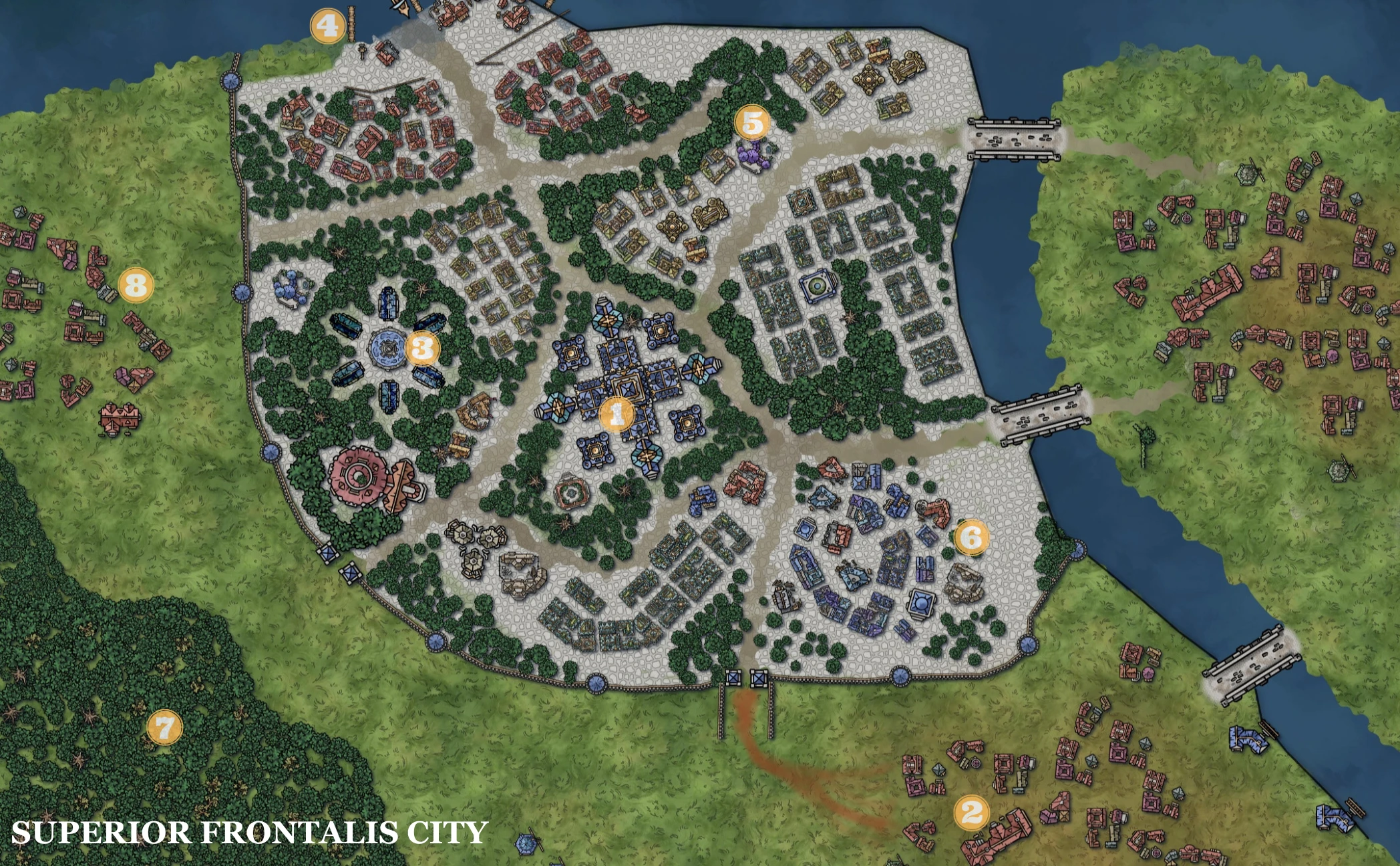
Rise and Dream is a one-session scenario in three acts, set in the city of Superior Frontalis. Two patrons offer the party a job on the same night. Plutarch wants the senate’s records to prove that Gaia is conscious. Senator Scyllias wants a cargo guarded at the harbour. The party answers by placing two crystals in the window of their inn.
- What the party learns depends on their rolls. A higher result on Notice or Contacts reveals more about the man who walks into the inn.
- Characters from outside the Brain choose whether to hide their horns. Showing them gives −2 to four social skills and +2 to Provoke and Notice.
- The library door is an NPC. It has its own aspects, including “I am a consciousness trapped inside a door”.
The second branch of the scenario is not finished yet.
Three more city maps
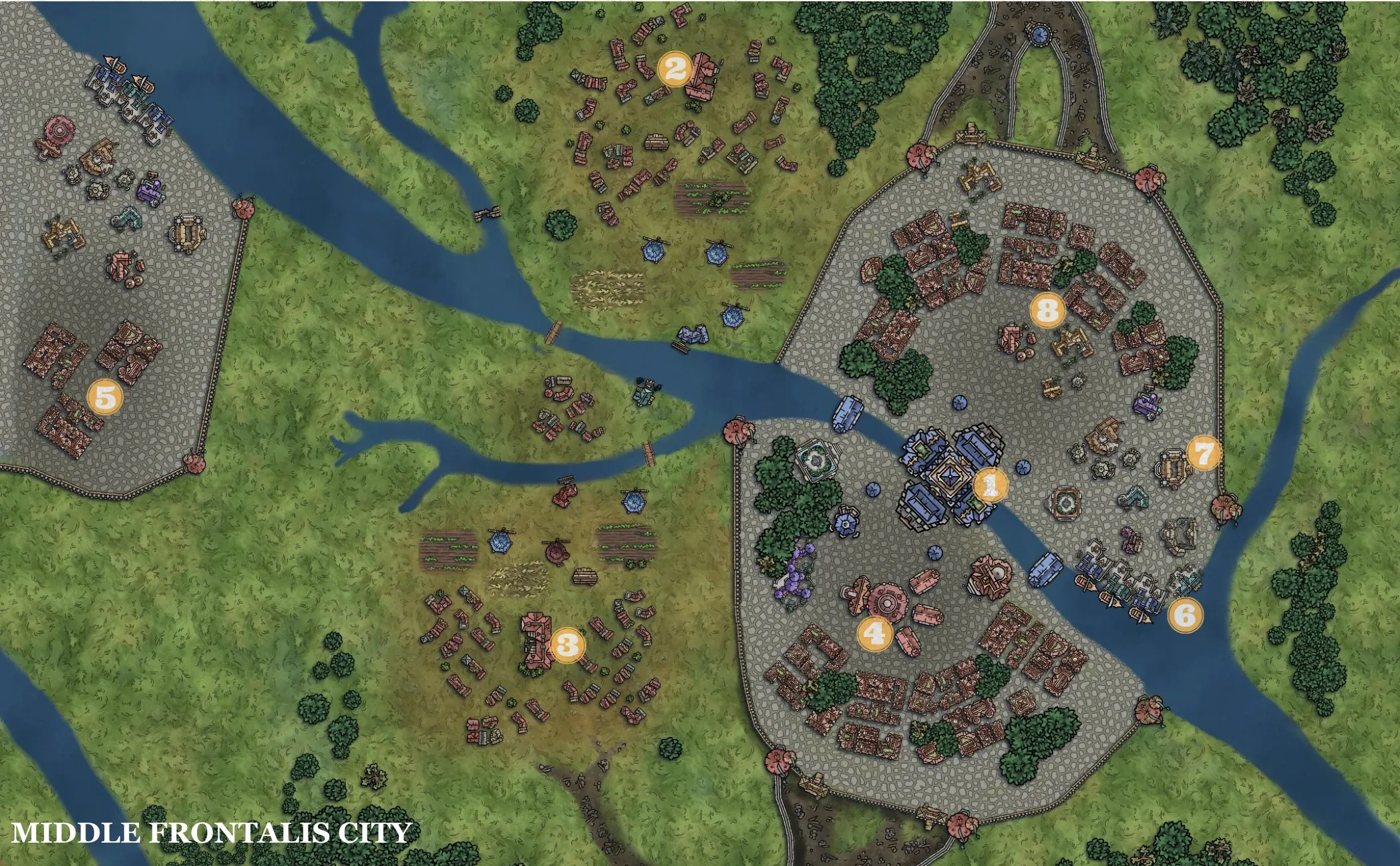 Middle Frontalis. Pages 42–43.
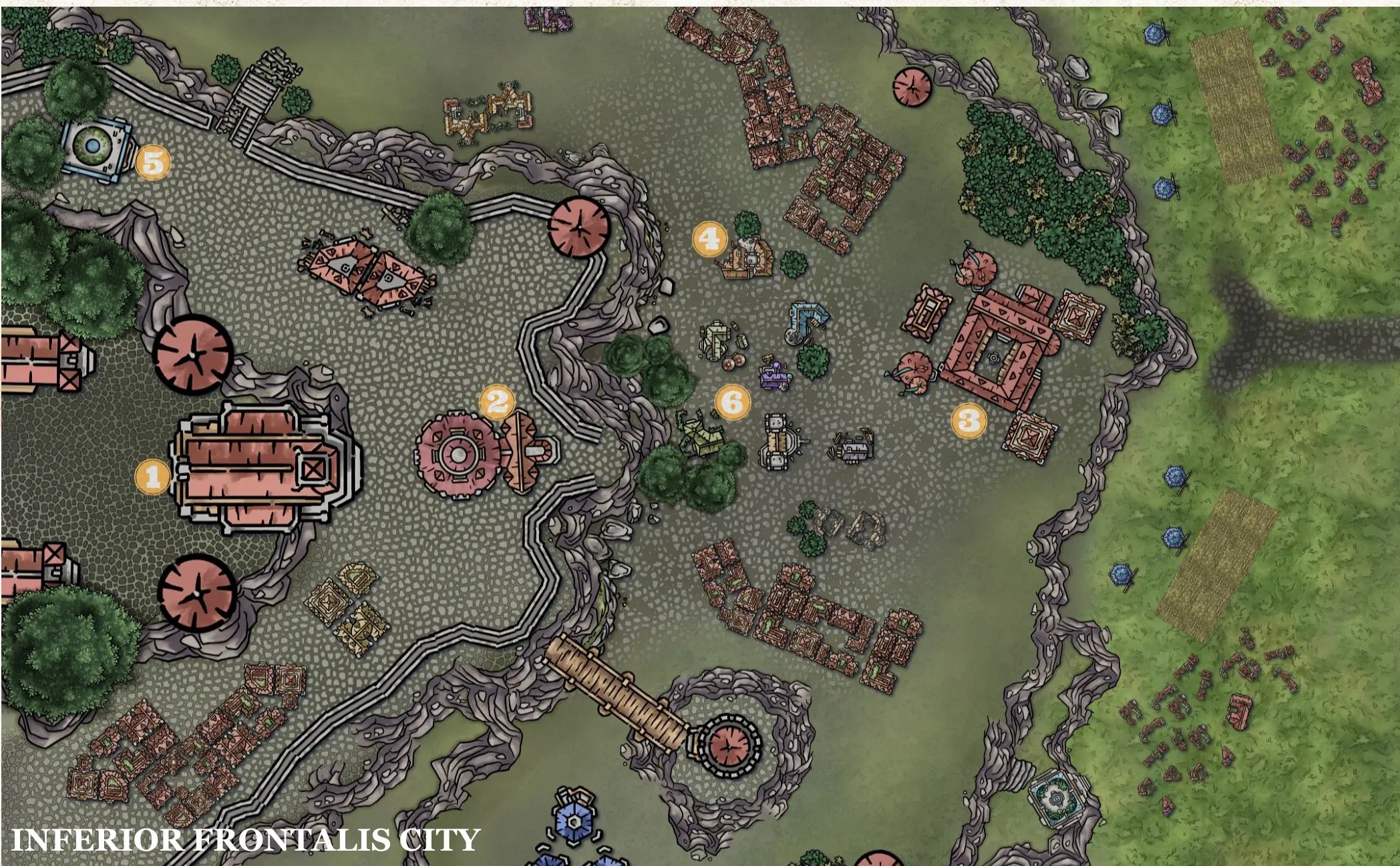 Inferior Frontalis. Pages 46–47.
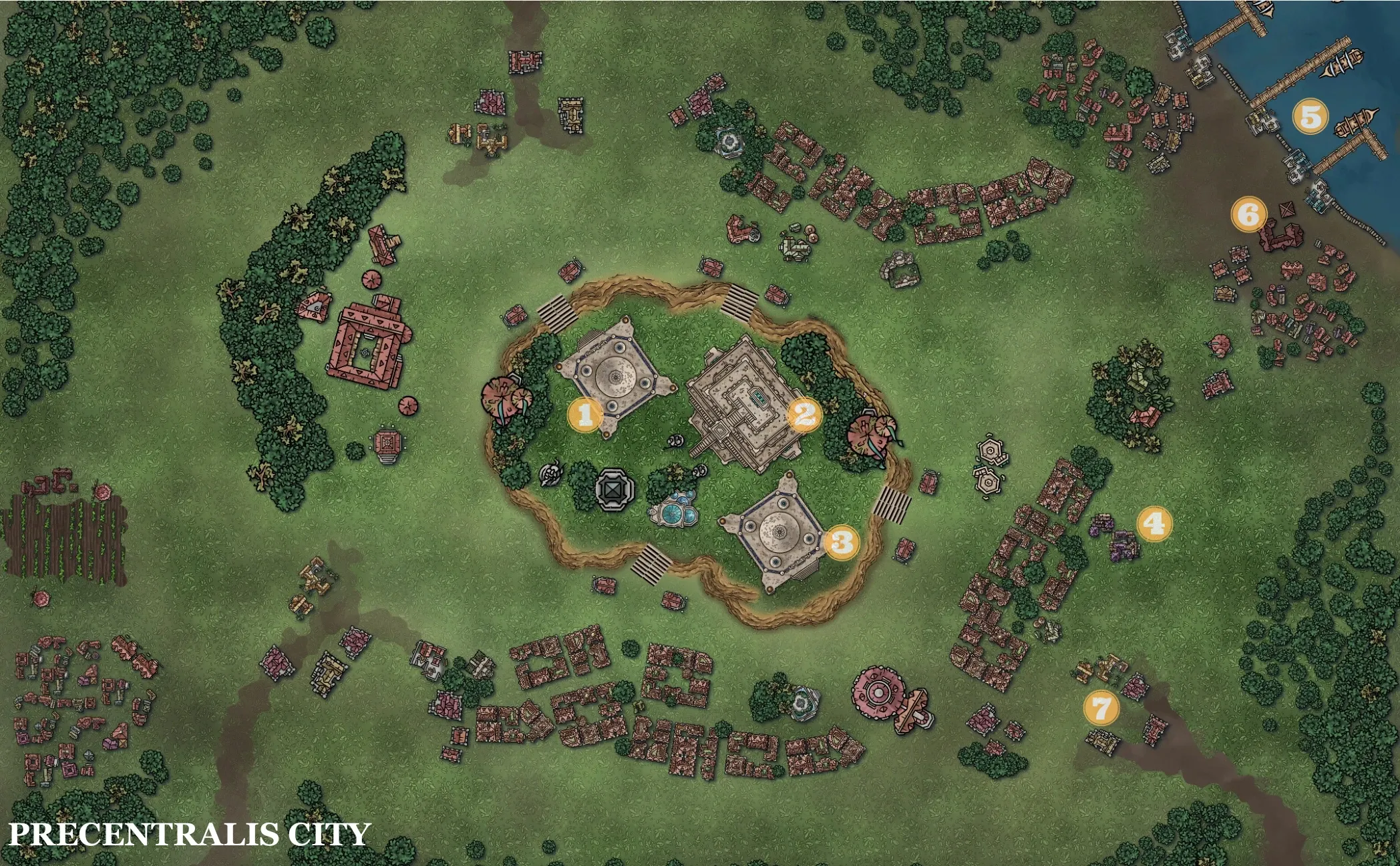 Precentralis. Pages 50–51.
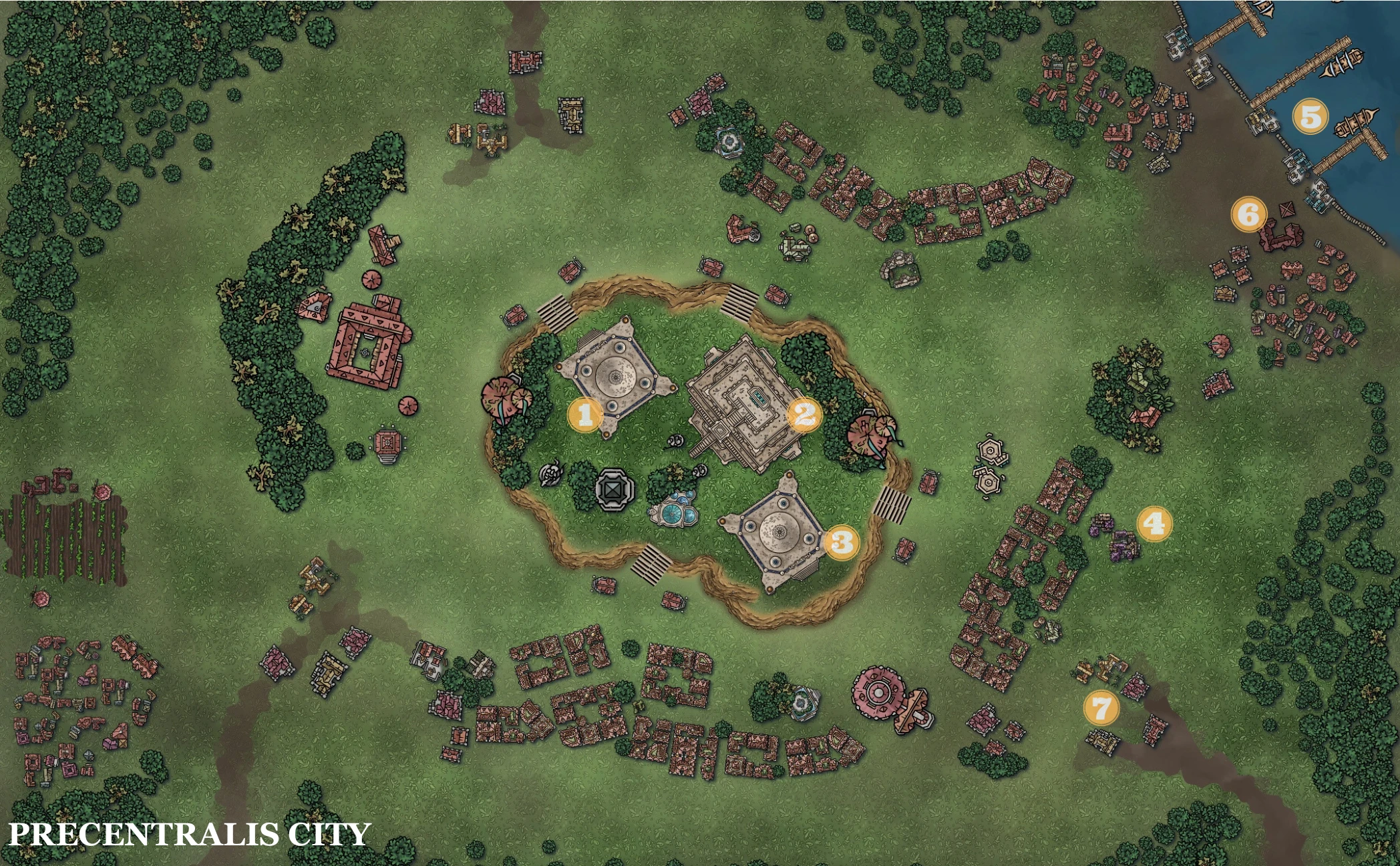
Each map combines its two-page spread.