I built Livber’s scenes and branches in articy:draft.
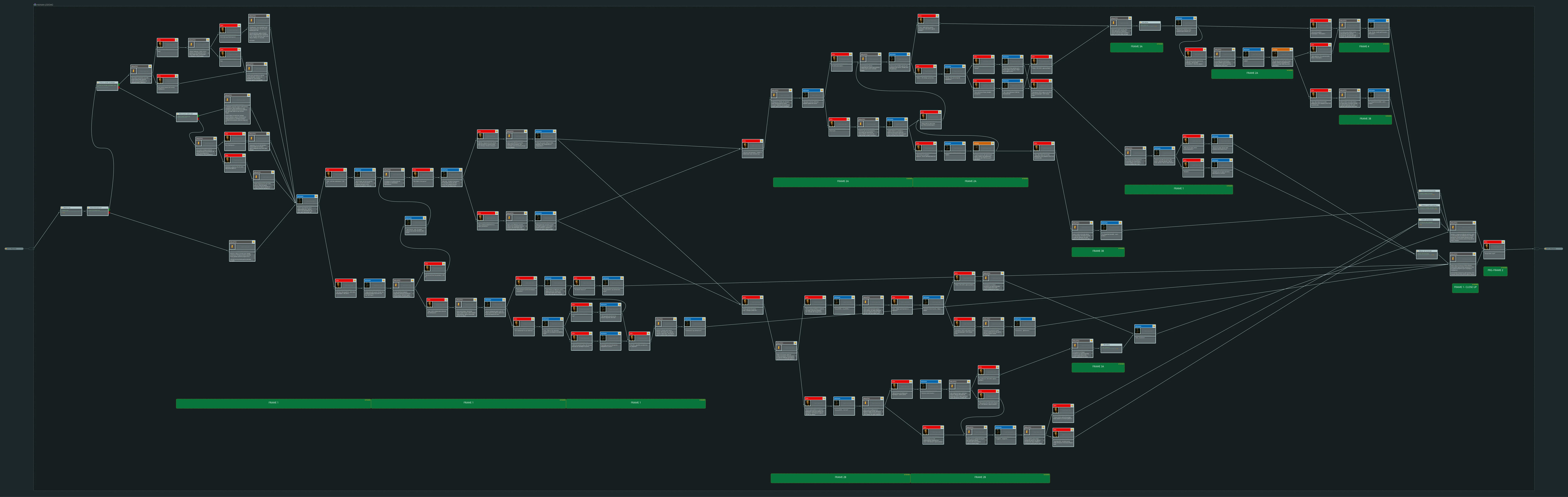
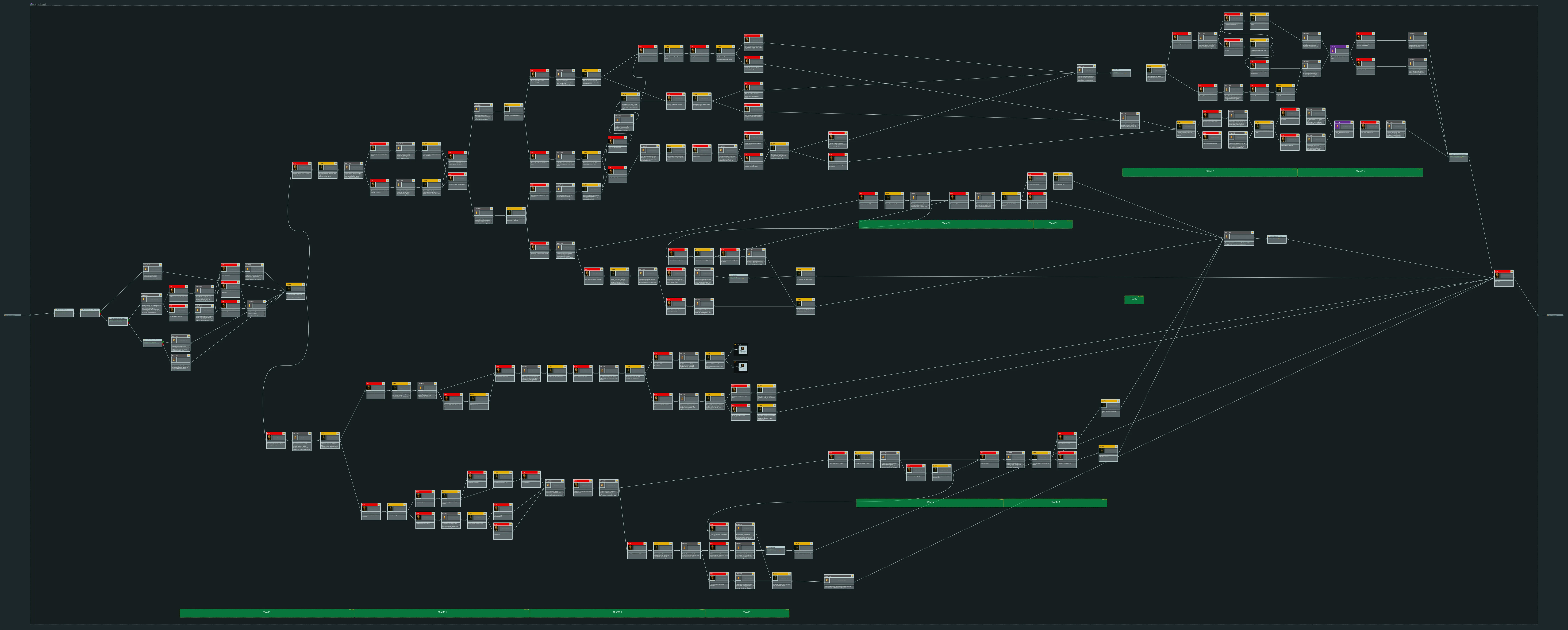
Every line of Livber was written and branched in articy:draft. This page shows the three acts exported straight from the project, first as a whole and then scene by scene, and how storyboard frames, speakers and story state are organised inside it.
Livber has eight endings: one early ending in Act 1, one in Act 2 and six in Act 3.
- 913
- Dialogue nodes in Act 3
- 18
- Conditions and instructions in Act 3
- 60
- Frame and note comments in Act 3
- 2
- Global state variables
Every image opens at full resolution.
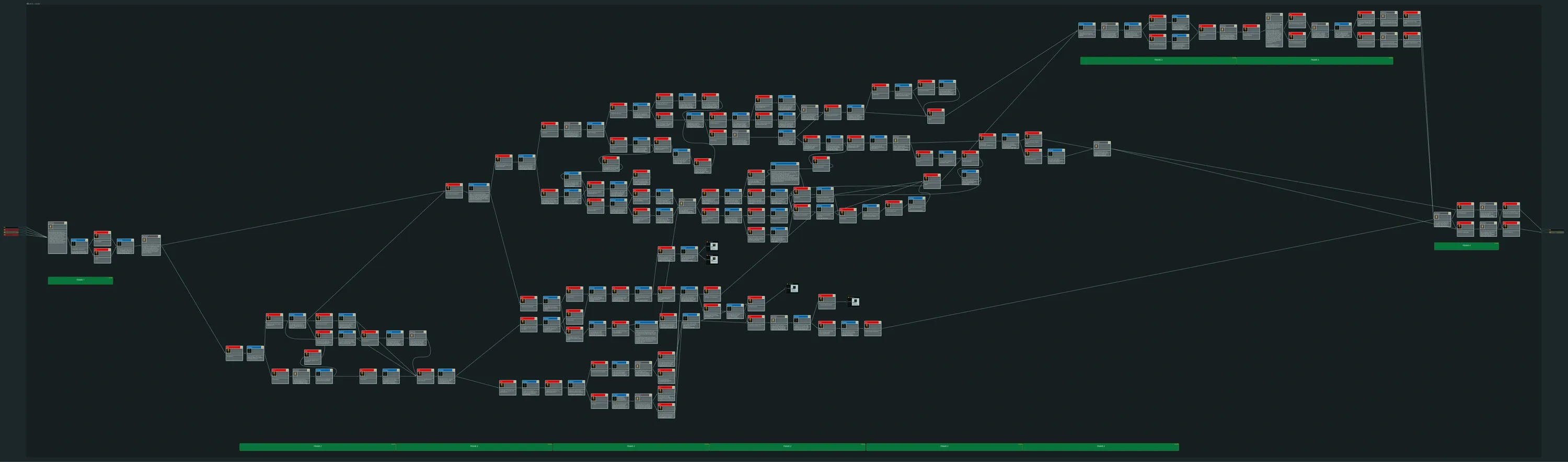
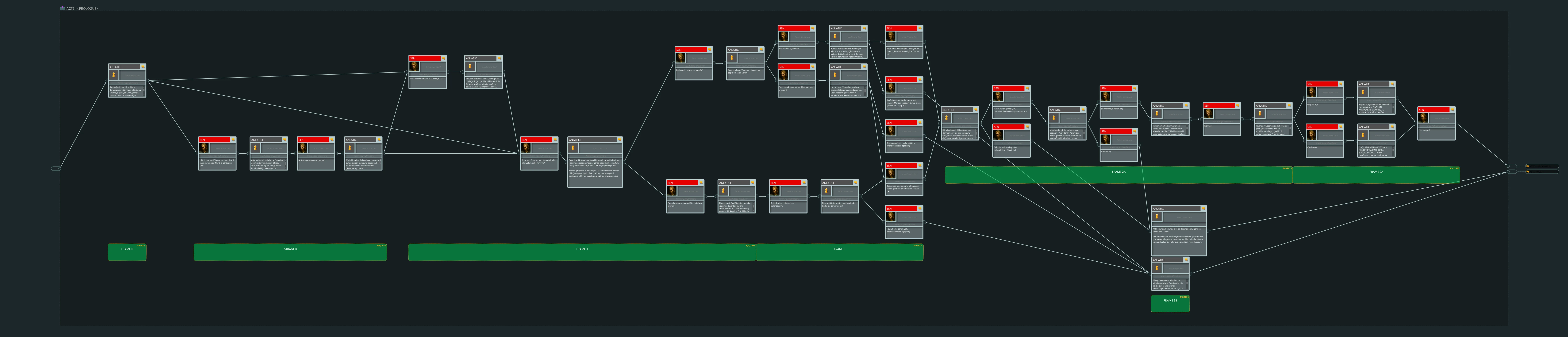
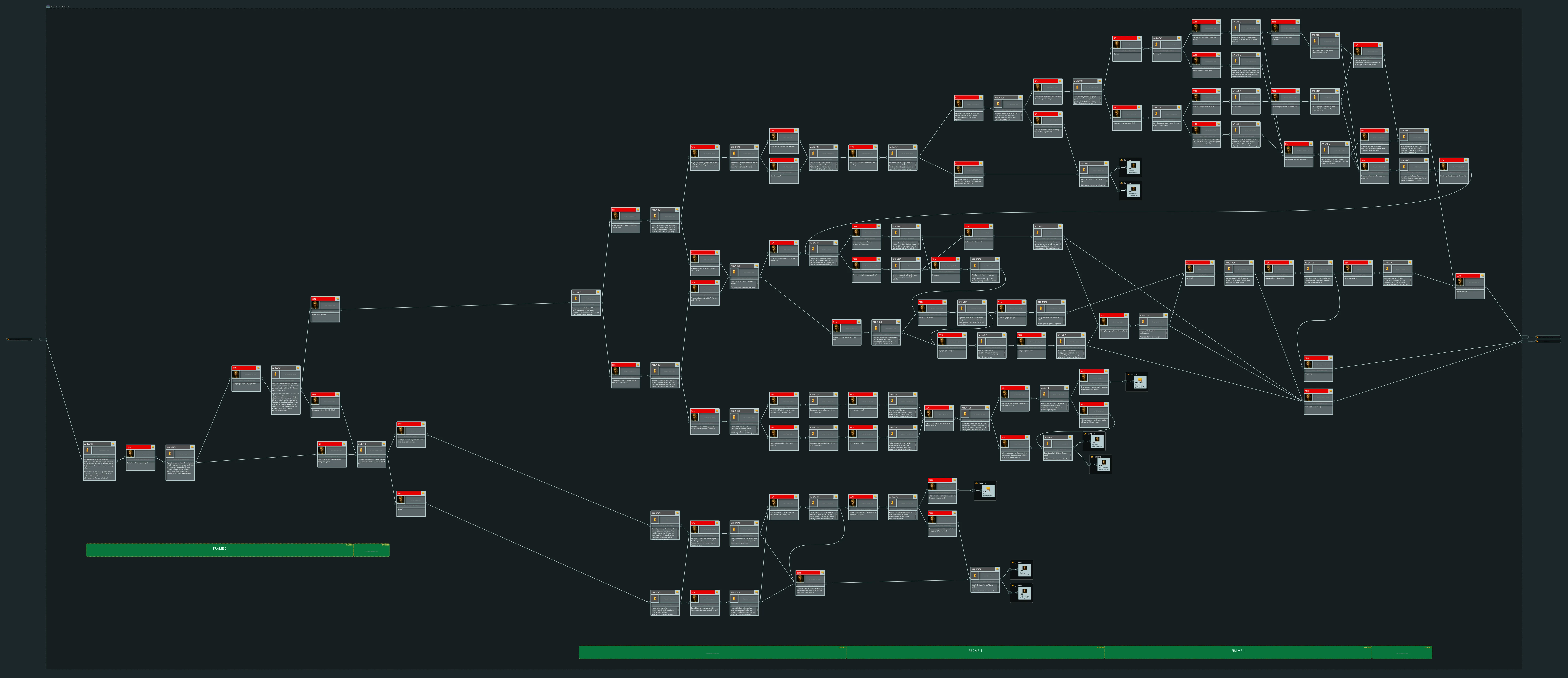
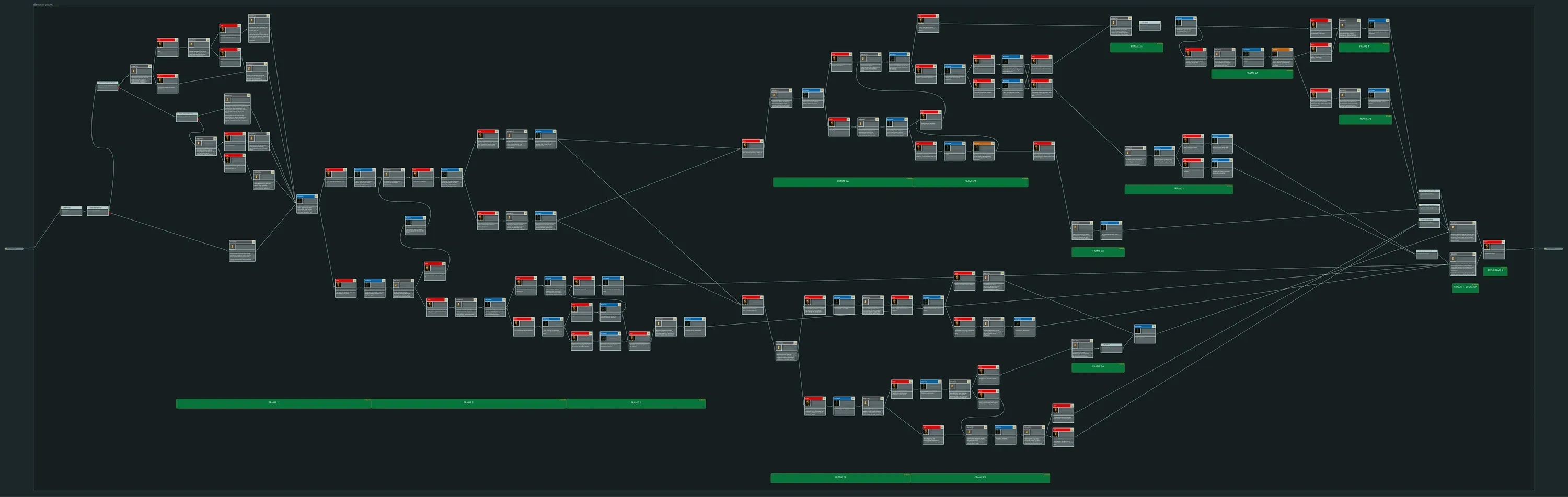
Act 1 branches around the visit to Lilith’s house.
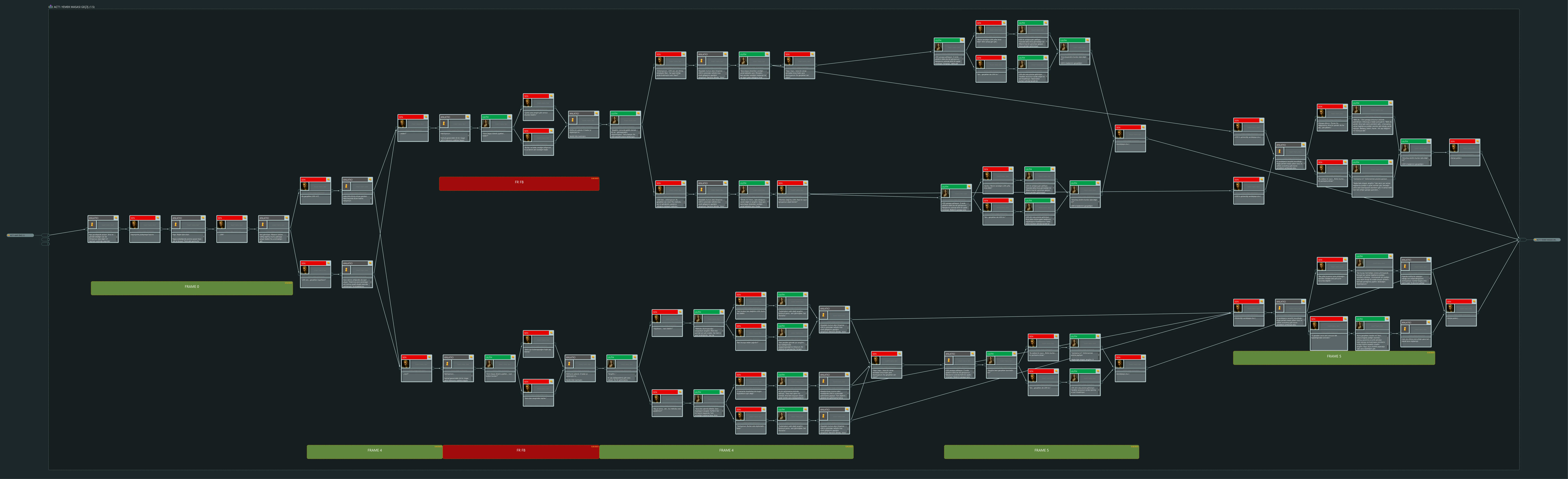
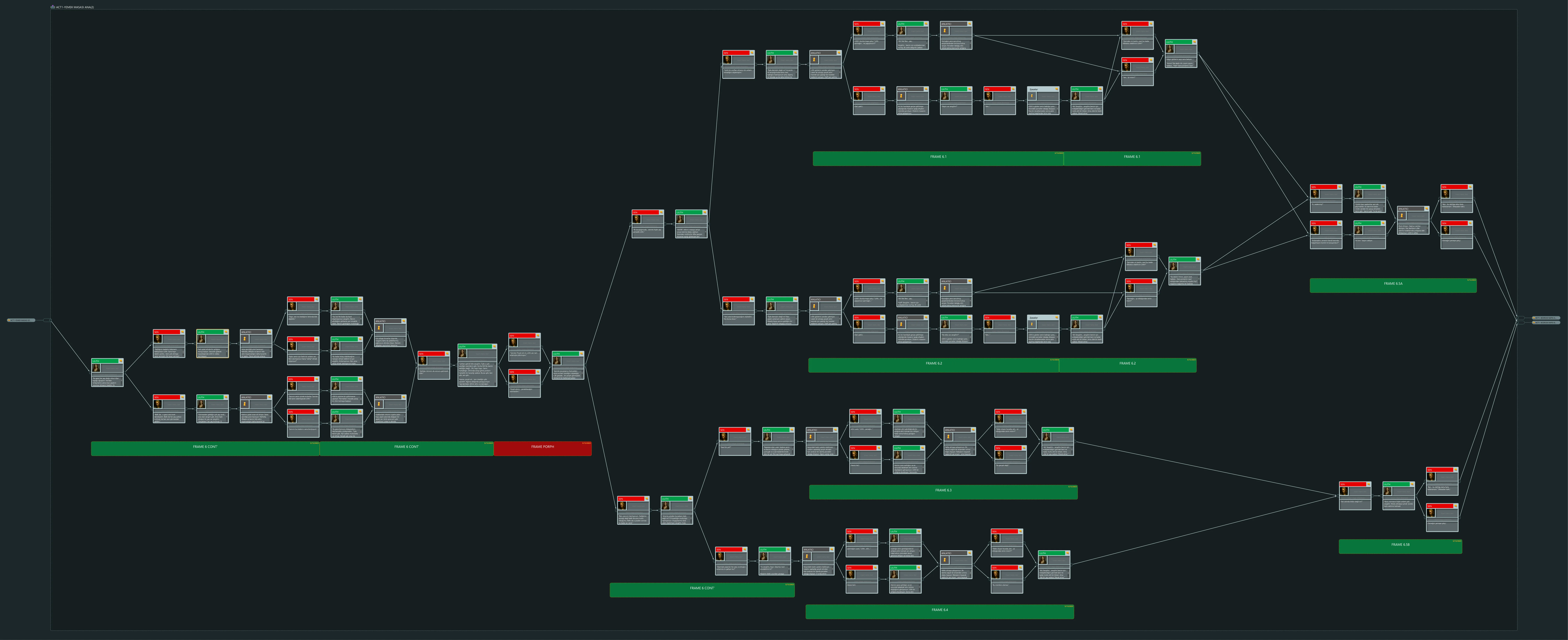
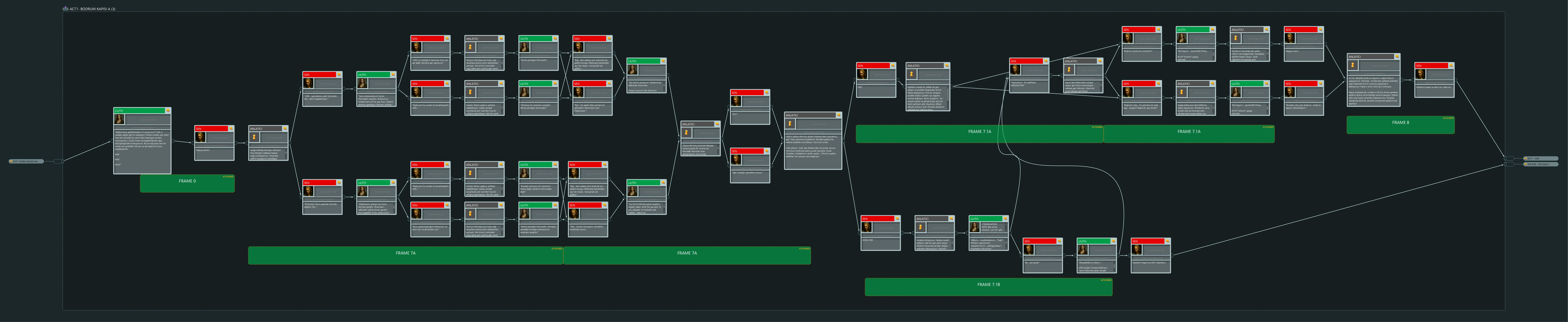
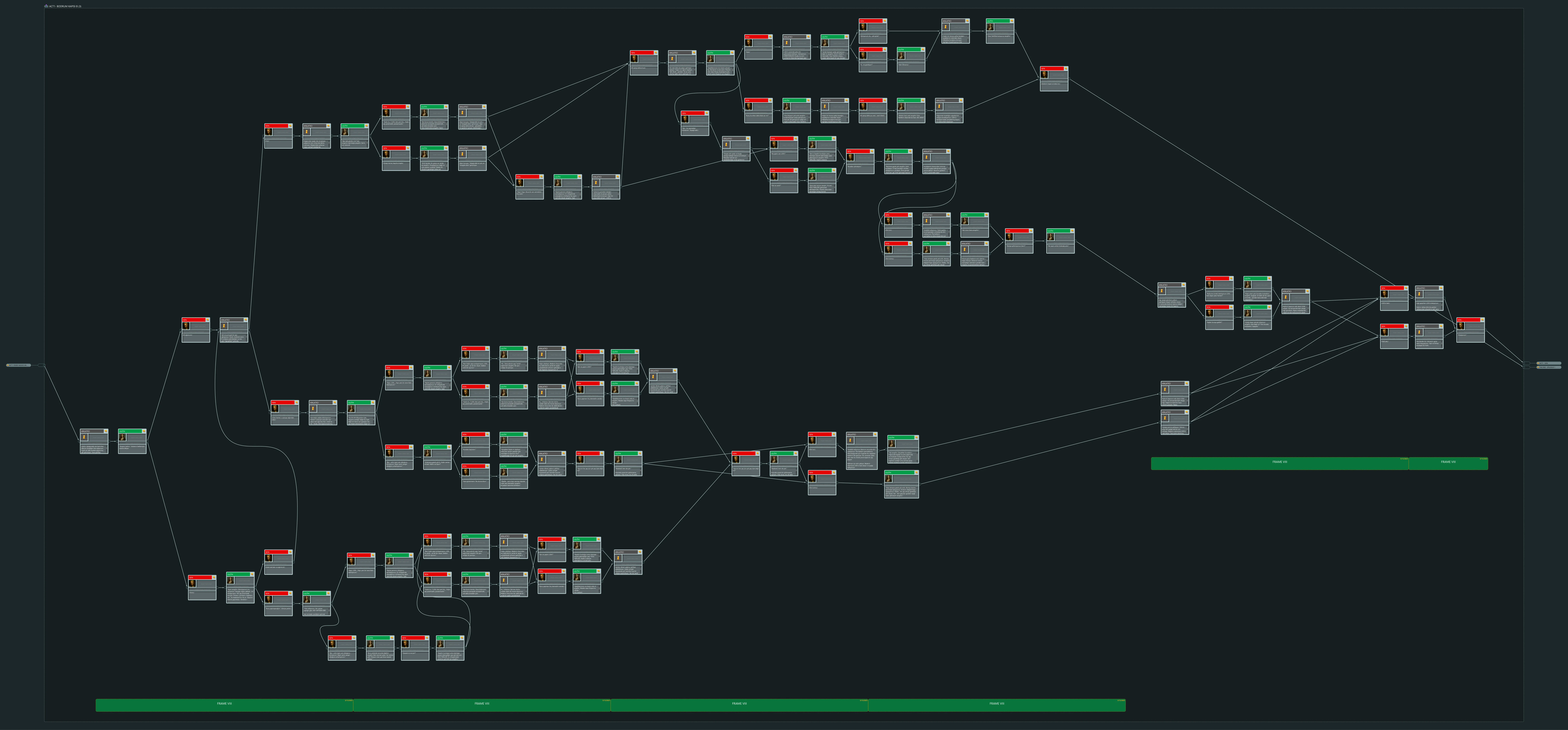
The act is a chain of flow fragments, one per scene. After dinner it splits in two, depending on whether Elbek leaves the table or eats, and both branches lead on to the end of the act or to an early epilogue.
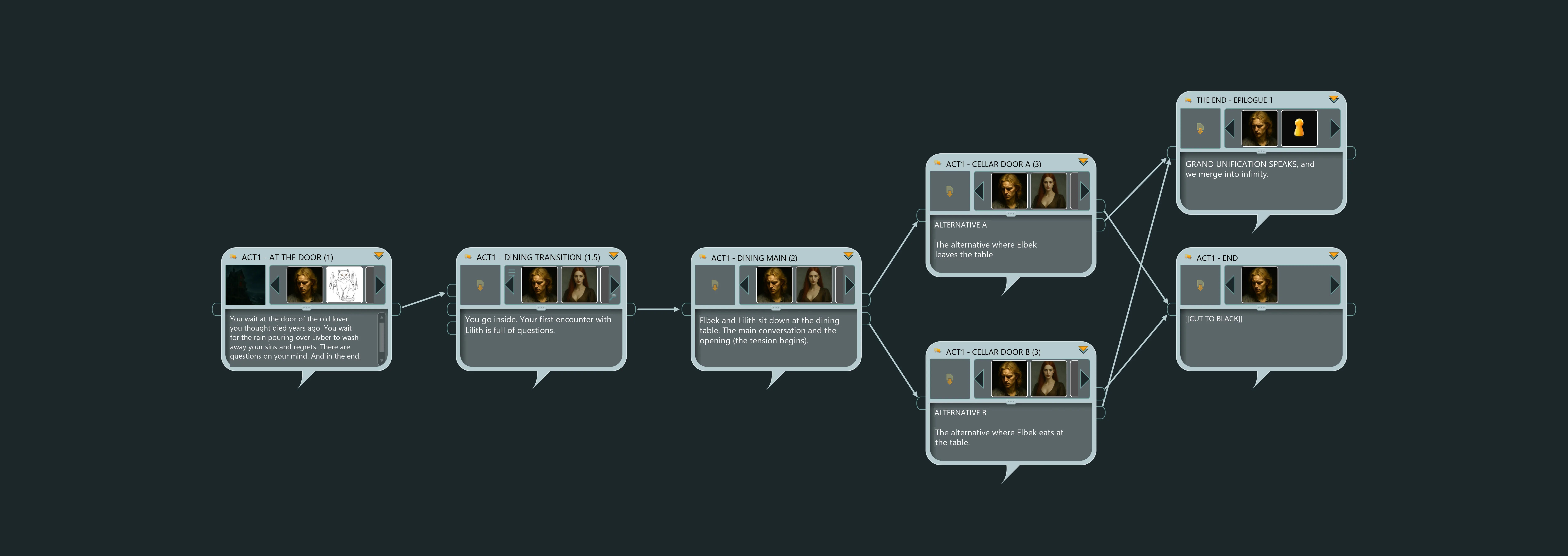
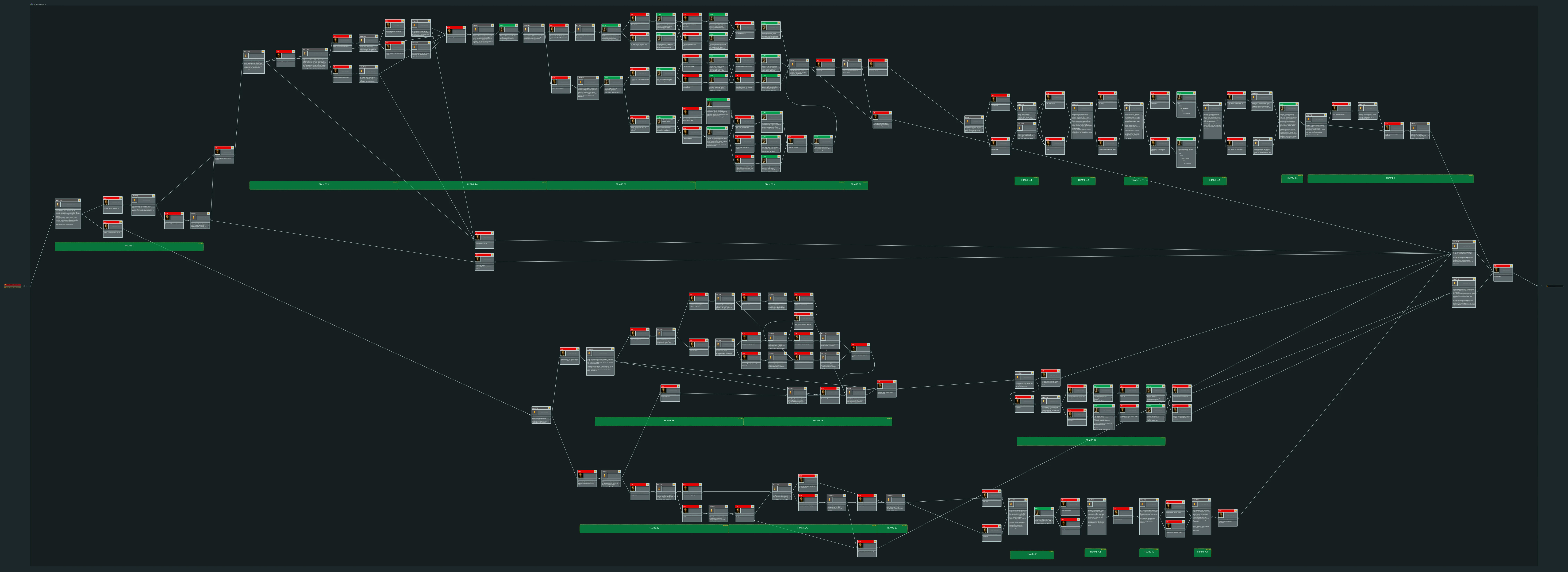
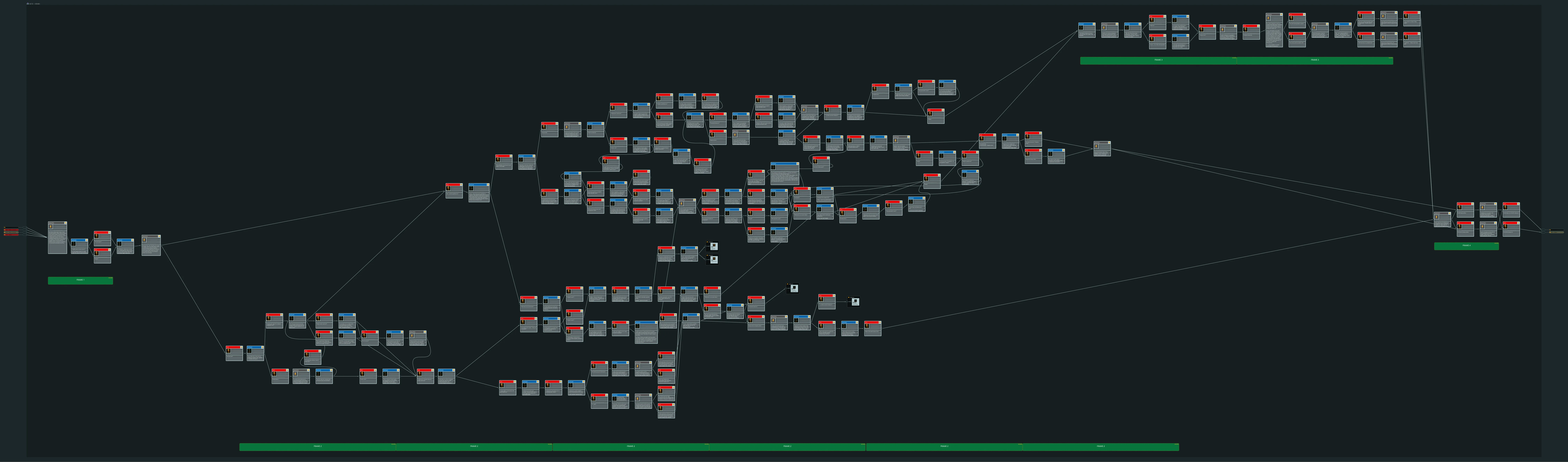
Each node above holds its own flow. Inside, the green bars are frame comments: they mark which storyboard frame a stretch of dialogue belongs to, the same FR numbers used on the Miro board.
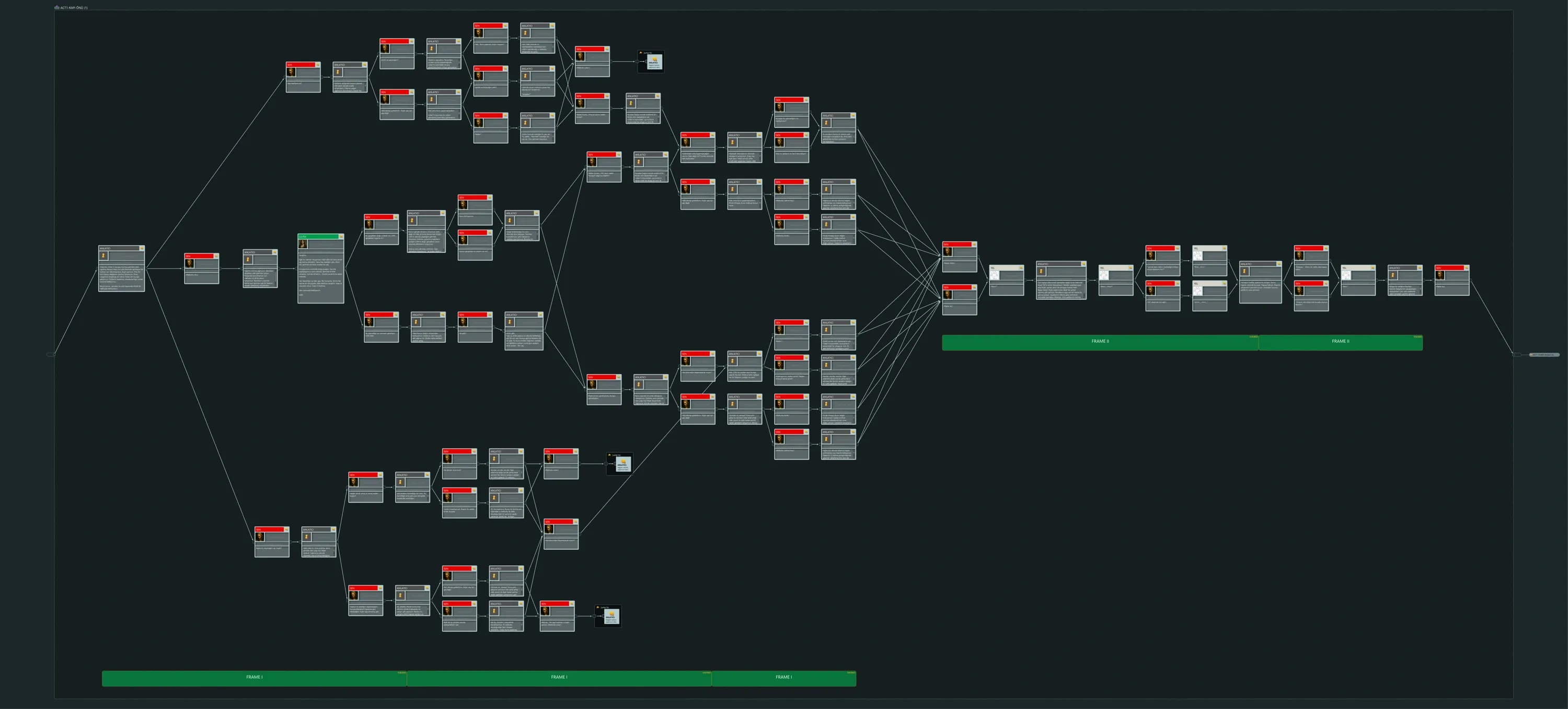 At the door
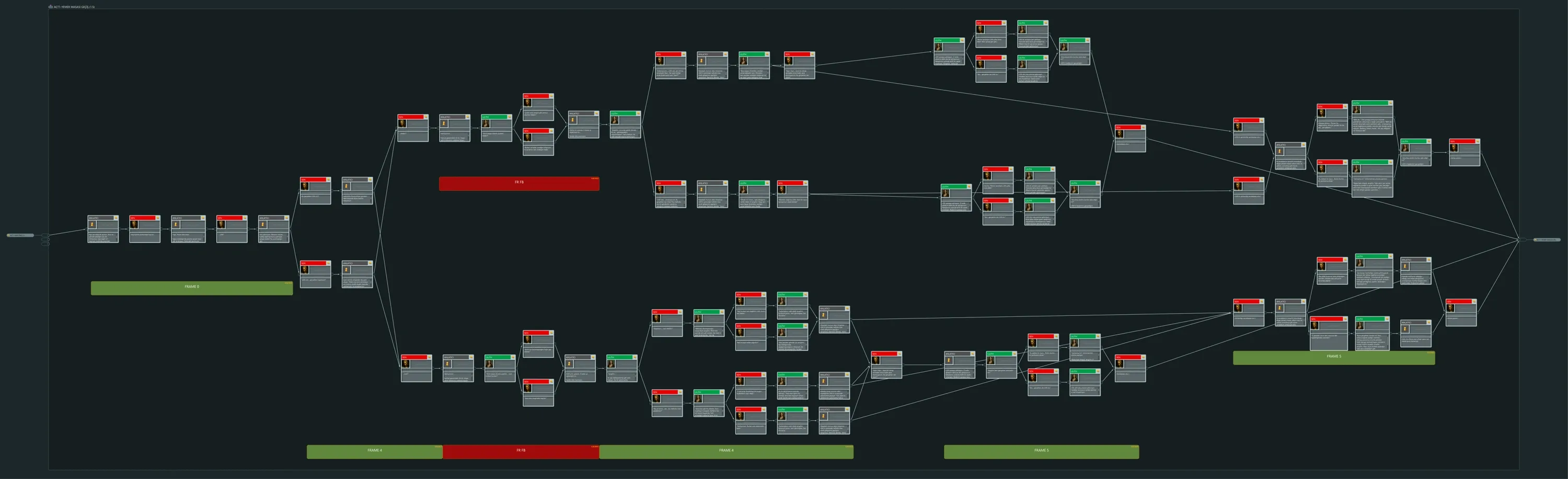 Dining transition
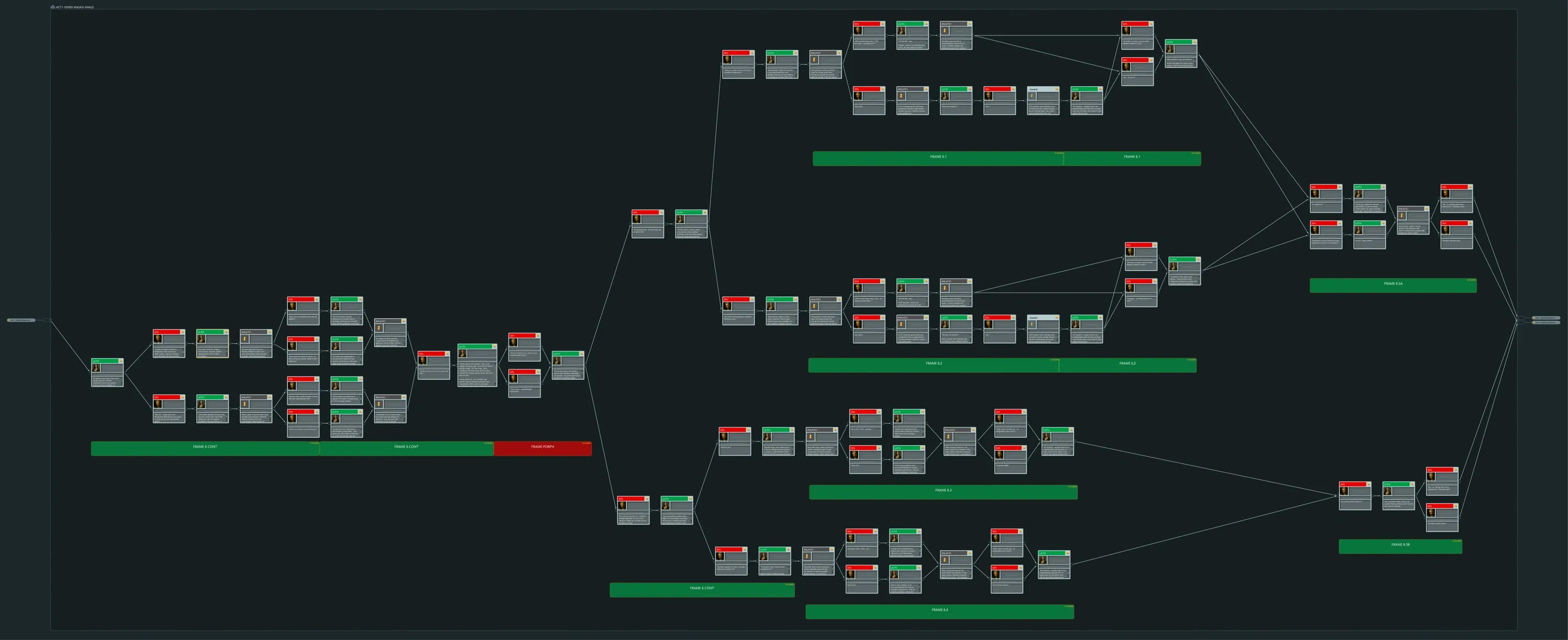 Dining main
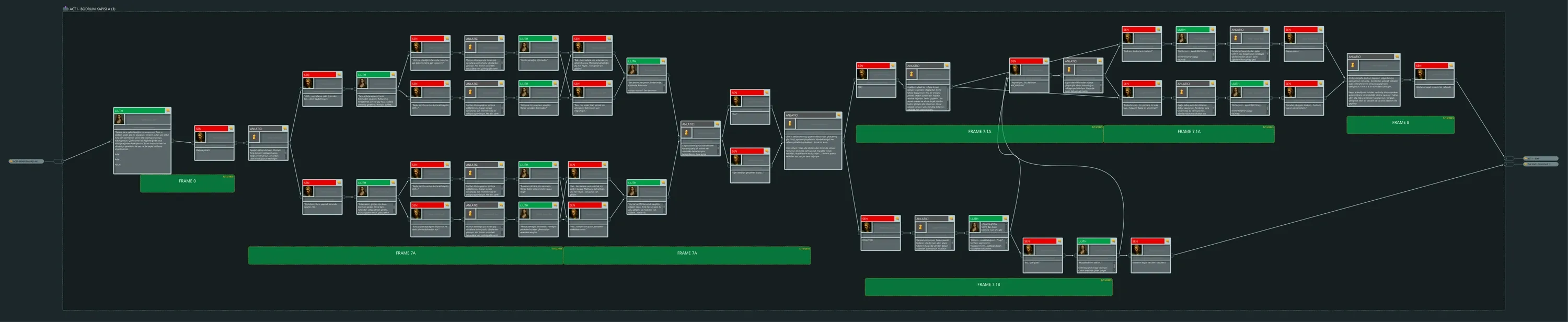 Cellar door A: Elbek leaves the table
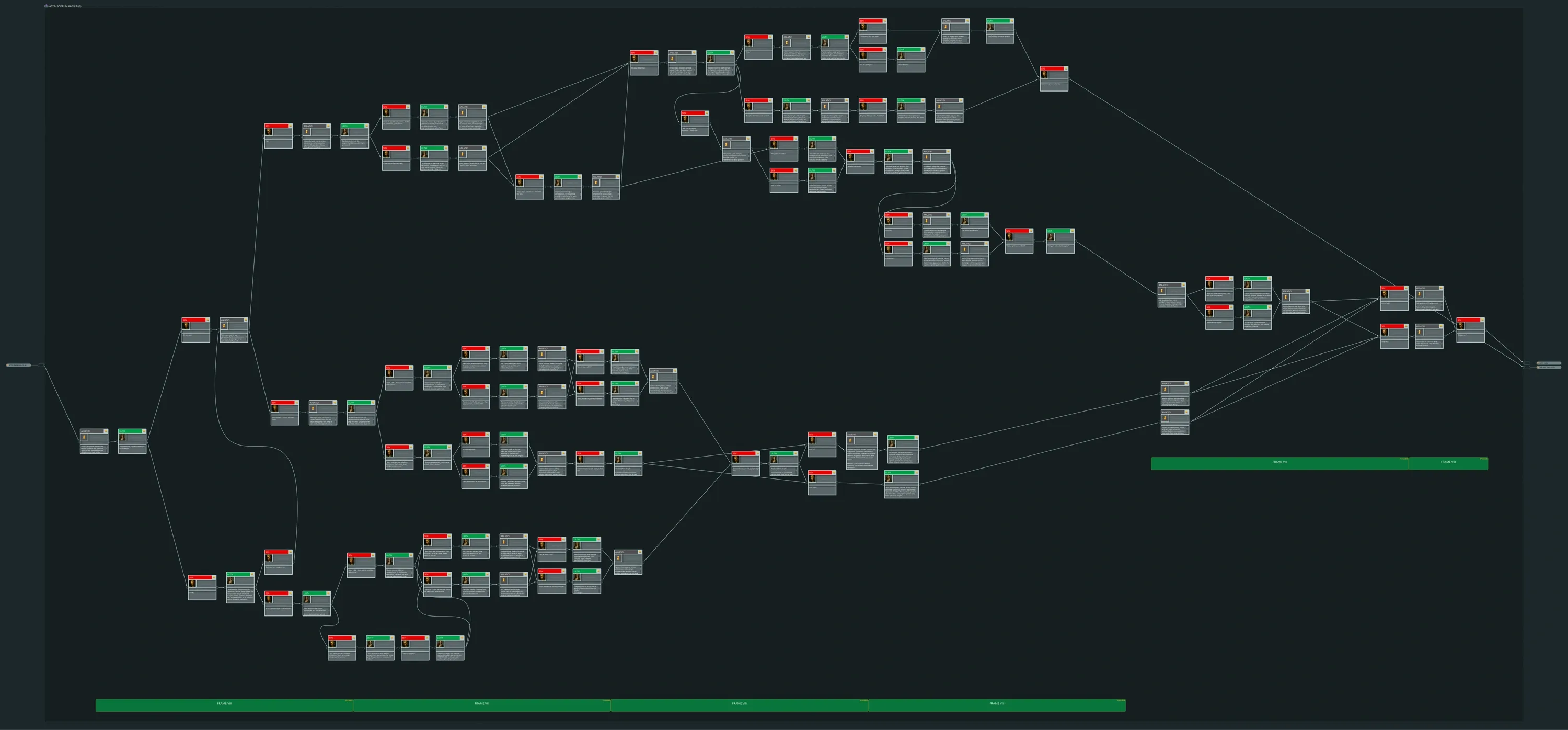 Cellar door B: Elbek eats
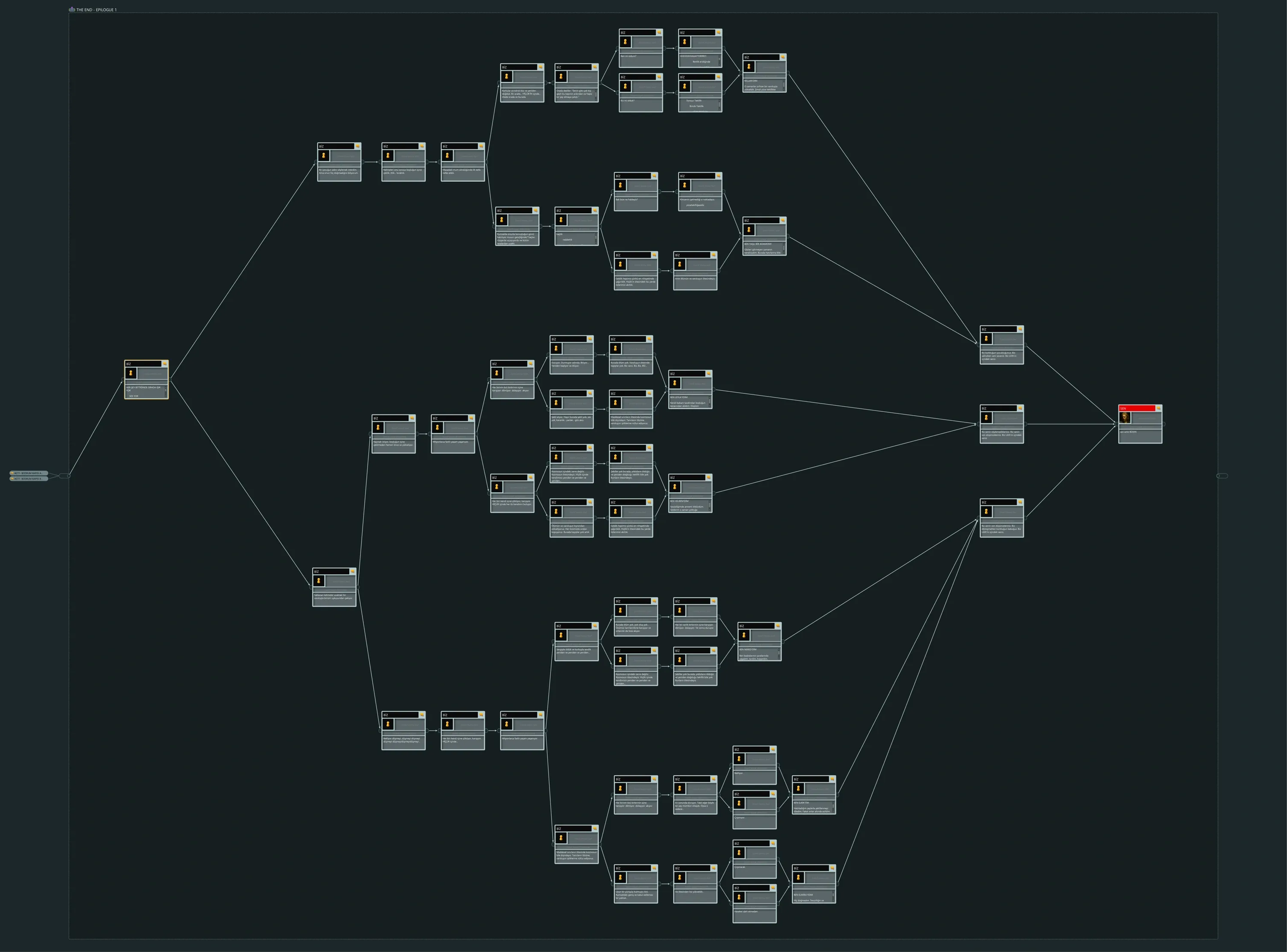 The end: Epilogue 1
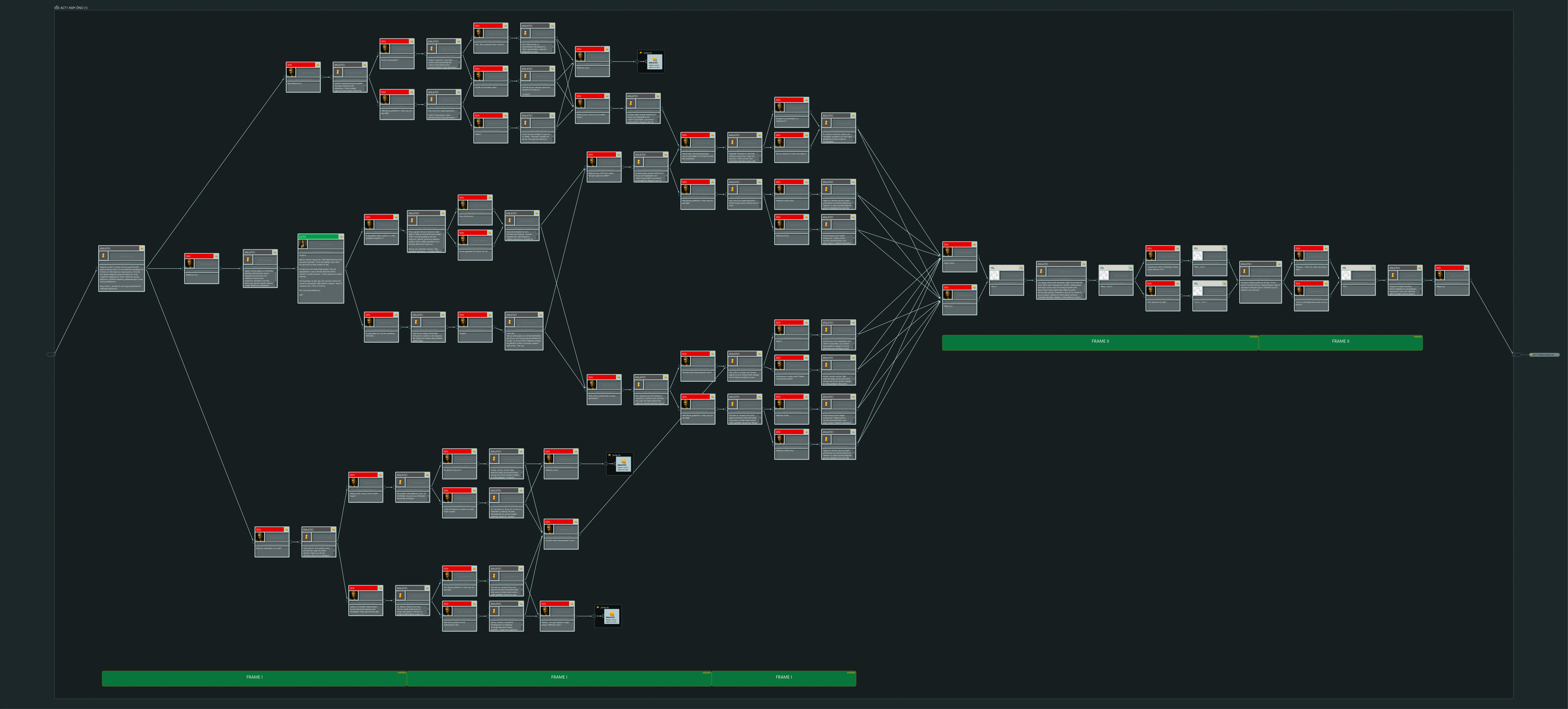
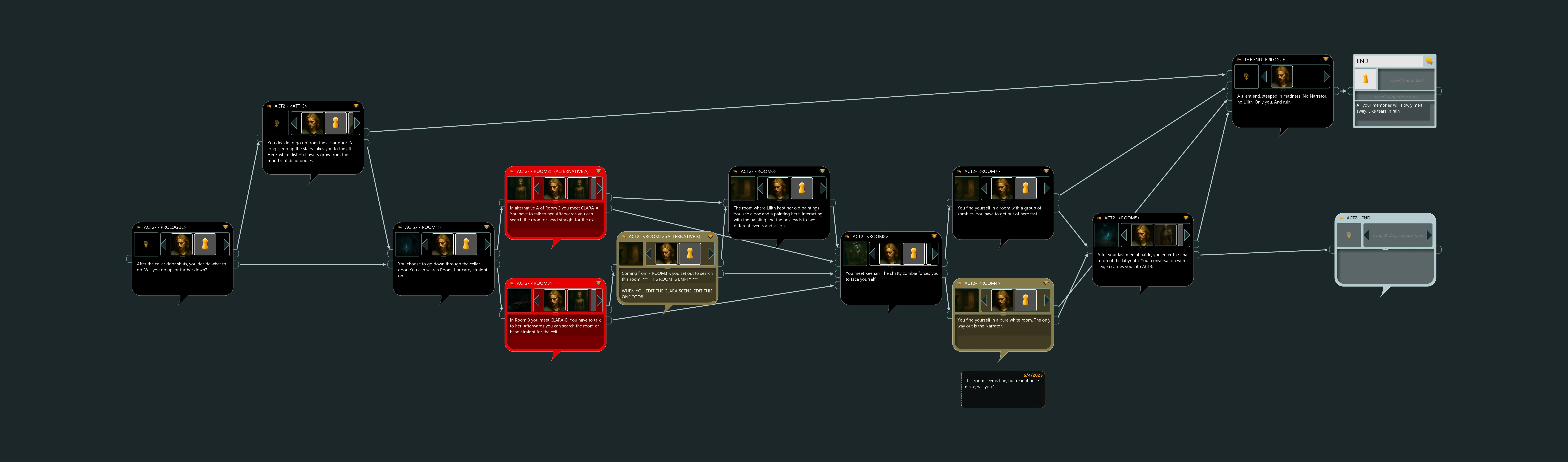
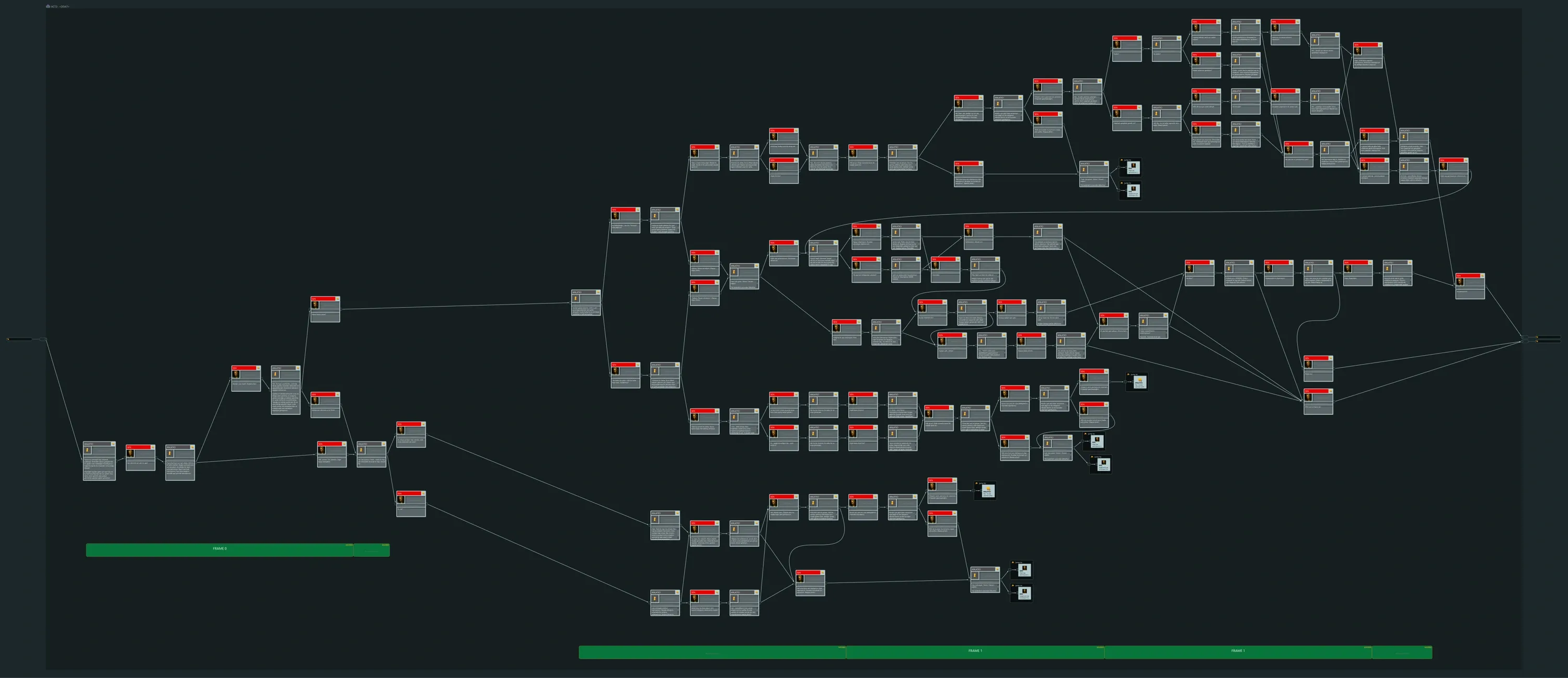
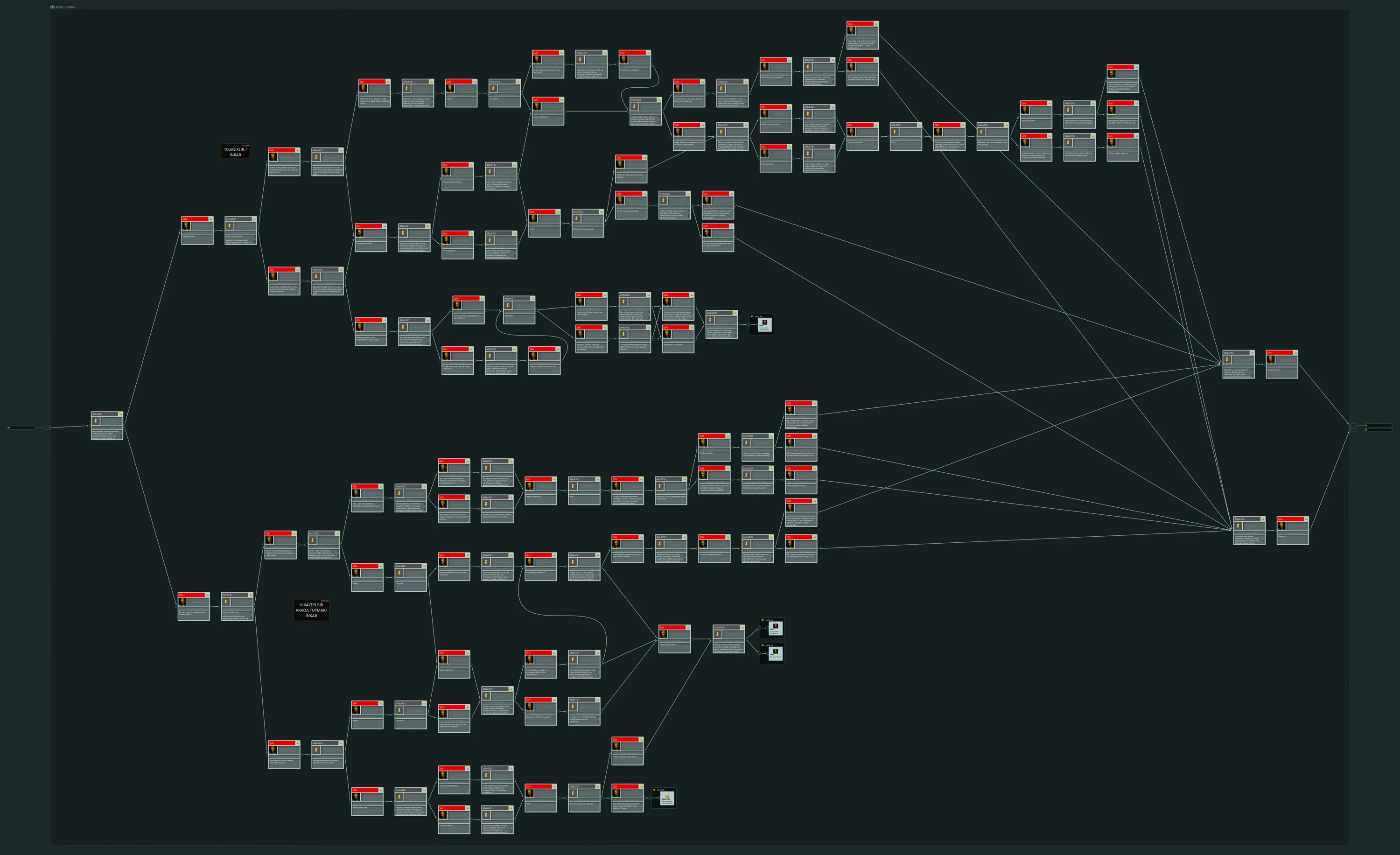
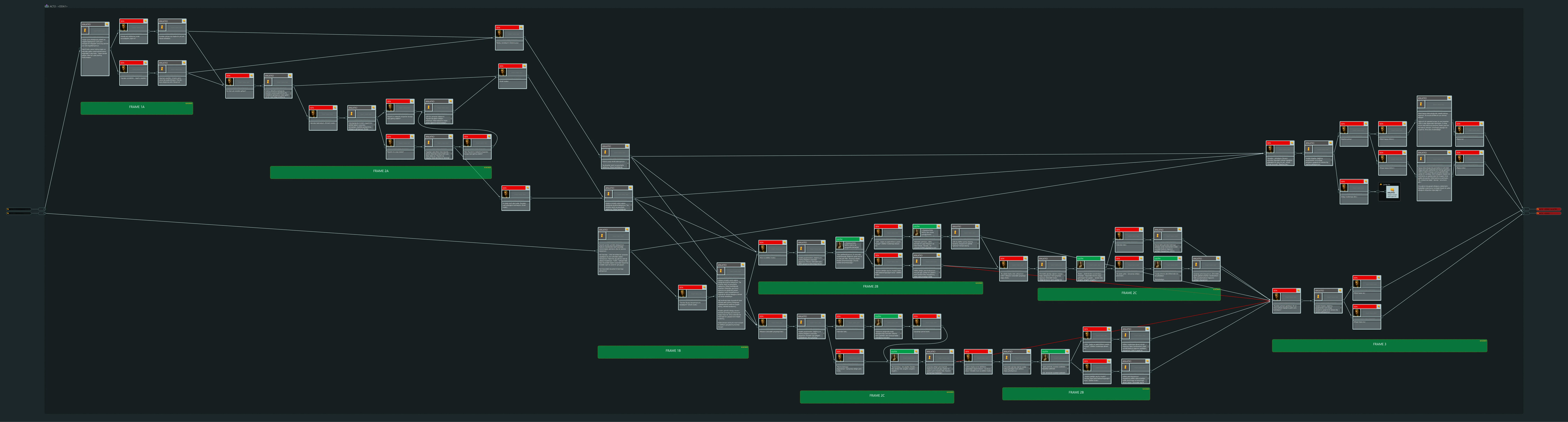
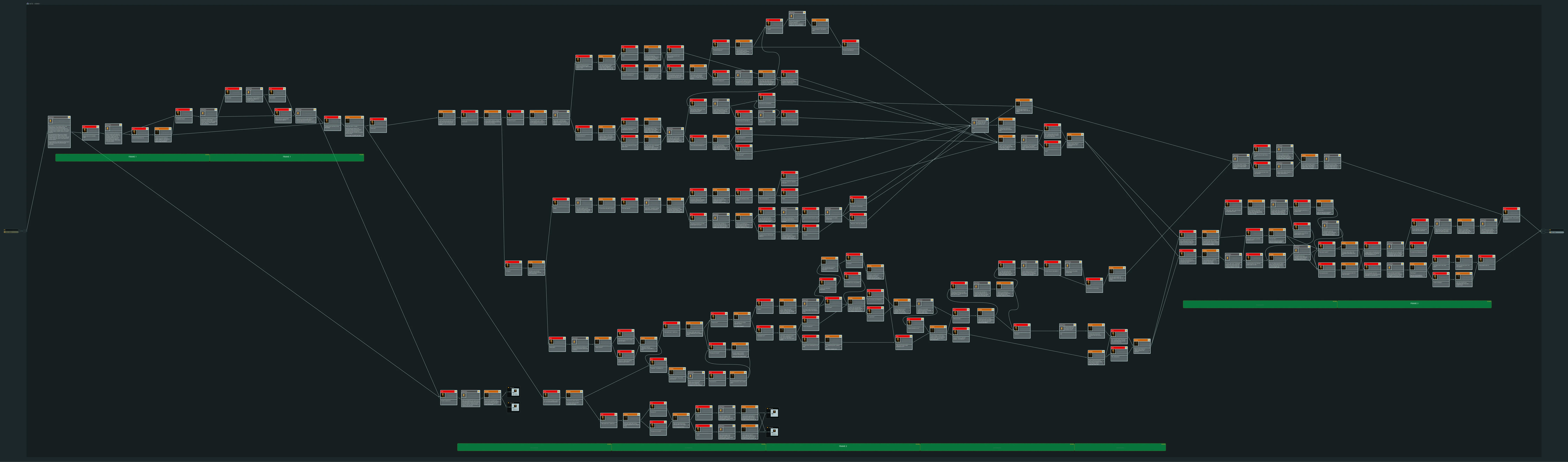
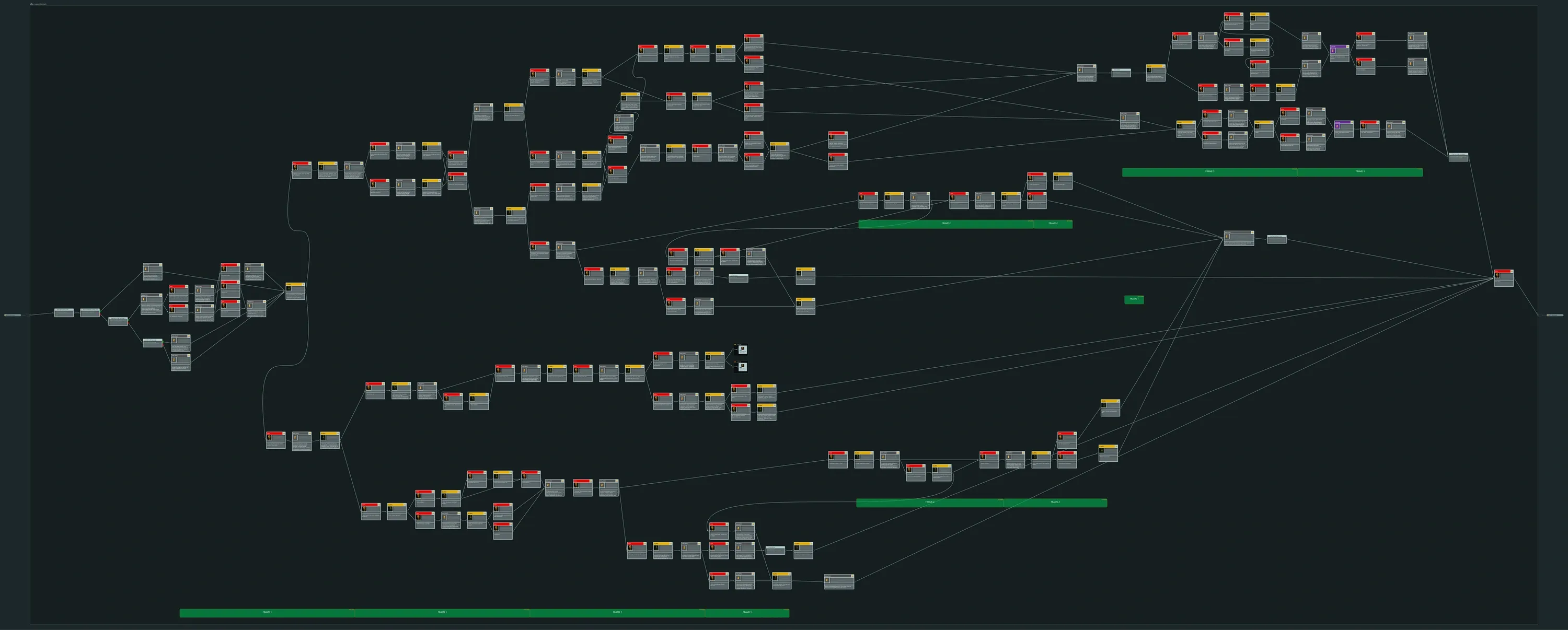
Act 2 connects the room scenes through the dungeon.
Act 2 is a run of rooms. After the cellar door shuts, the player goes up to the attic or down through the cellar. Clara waits in Room 2 or Room 3, Keenan in Room 8, and Leigea in Room 5, the last room, which carries the player into Act 3. Some routes, the attic among them, end the act in a silent epilogue instead.
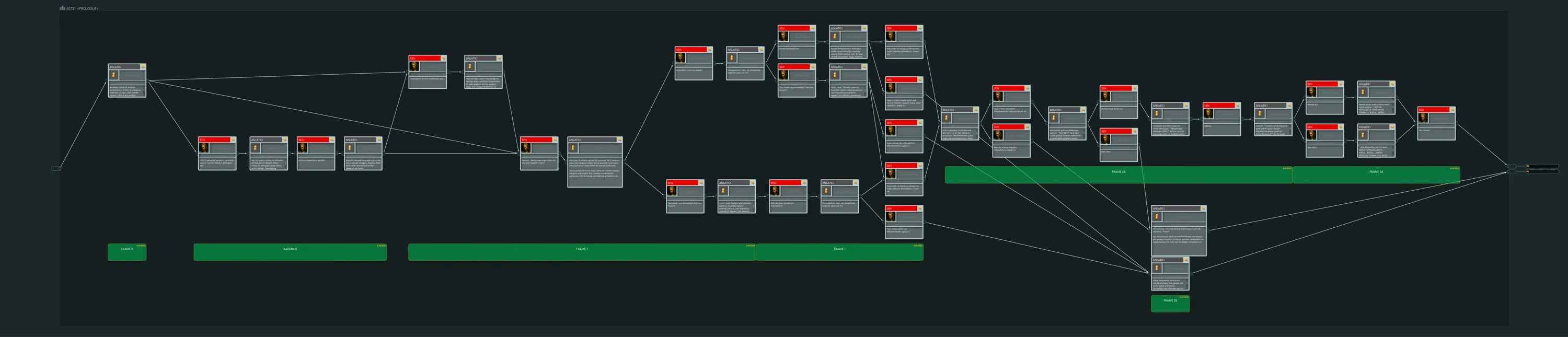 Prologue: up or down
 The attic
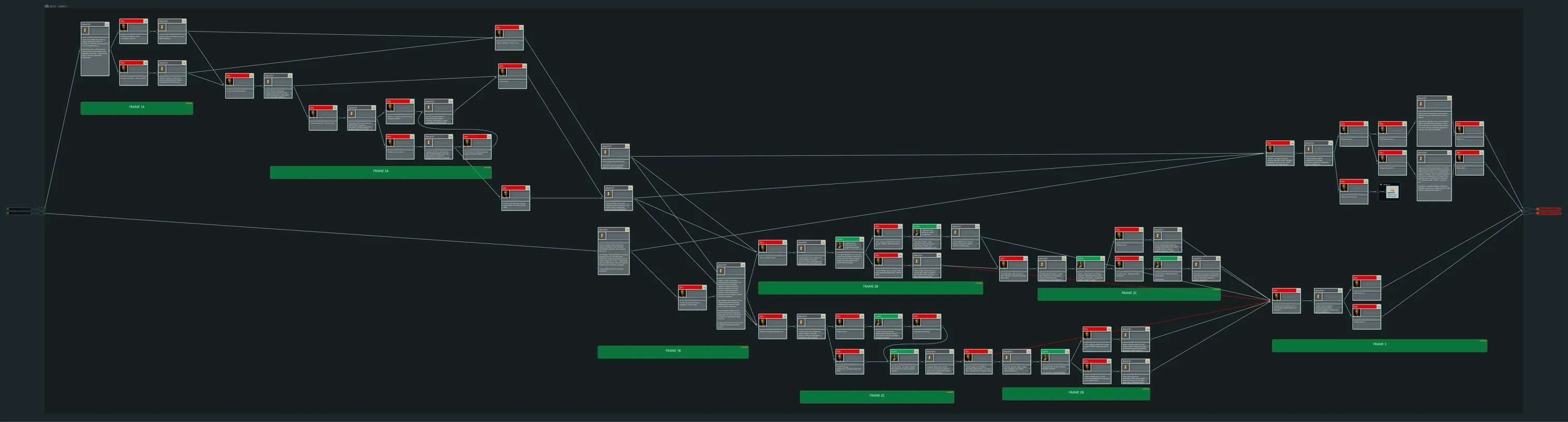 Room 1
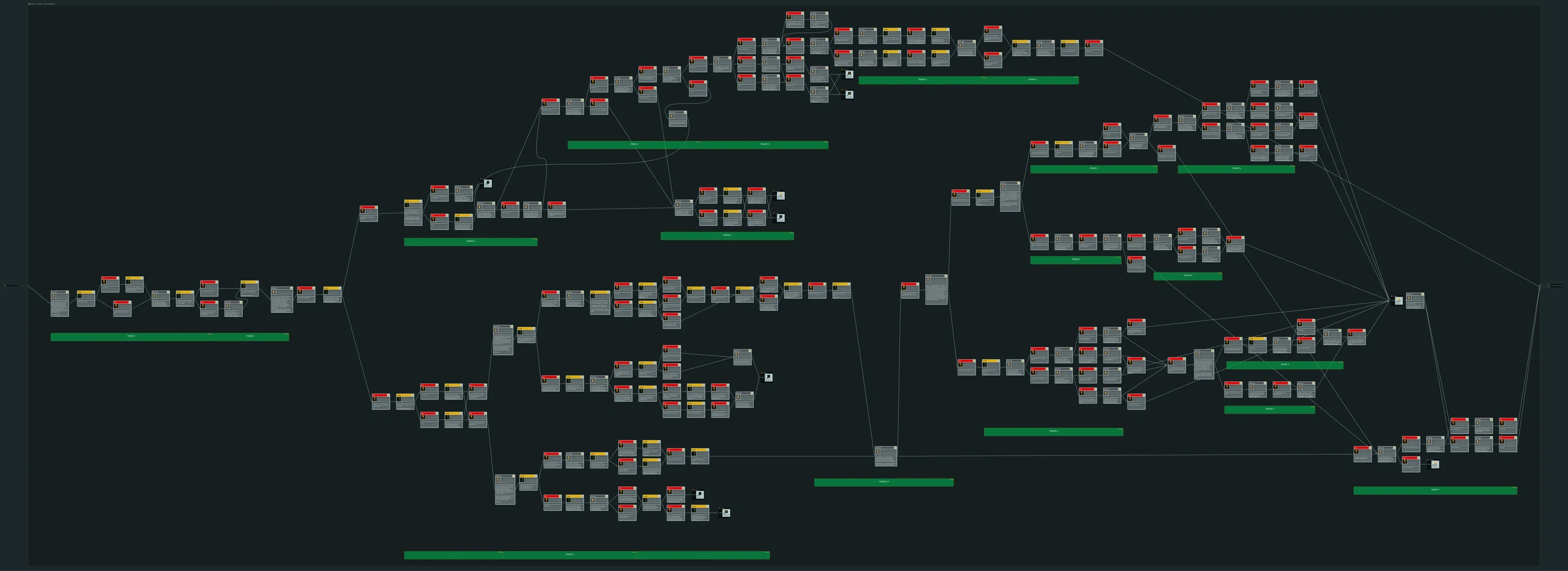 Room 2, alternative A: Clara
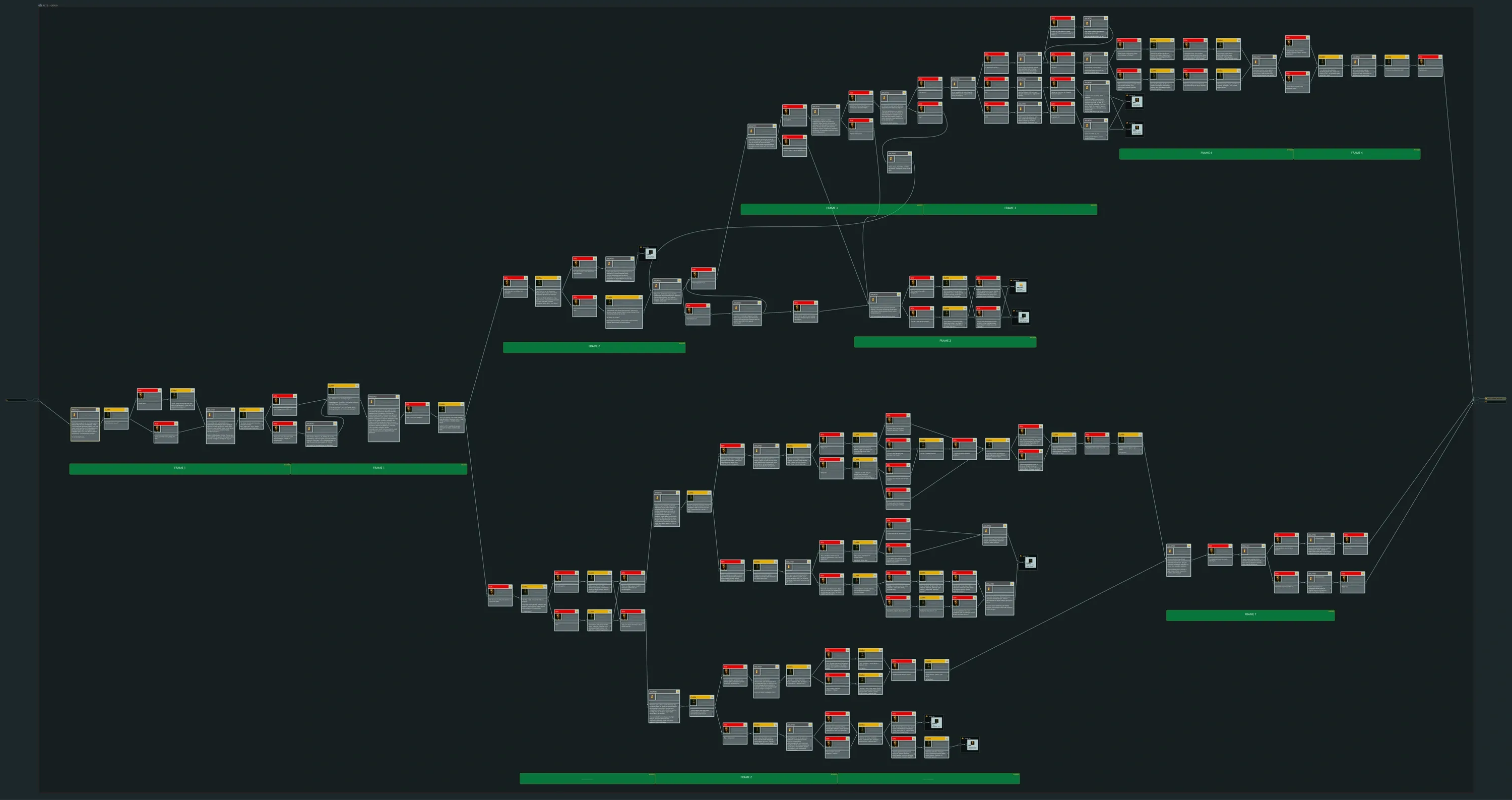 Room 3: Clara
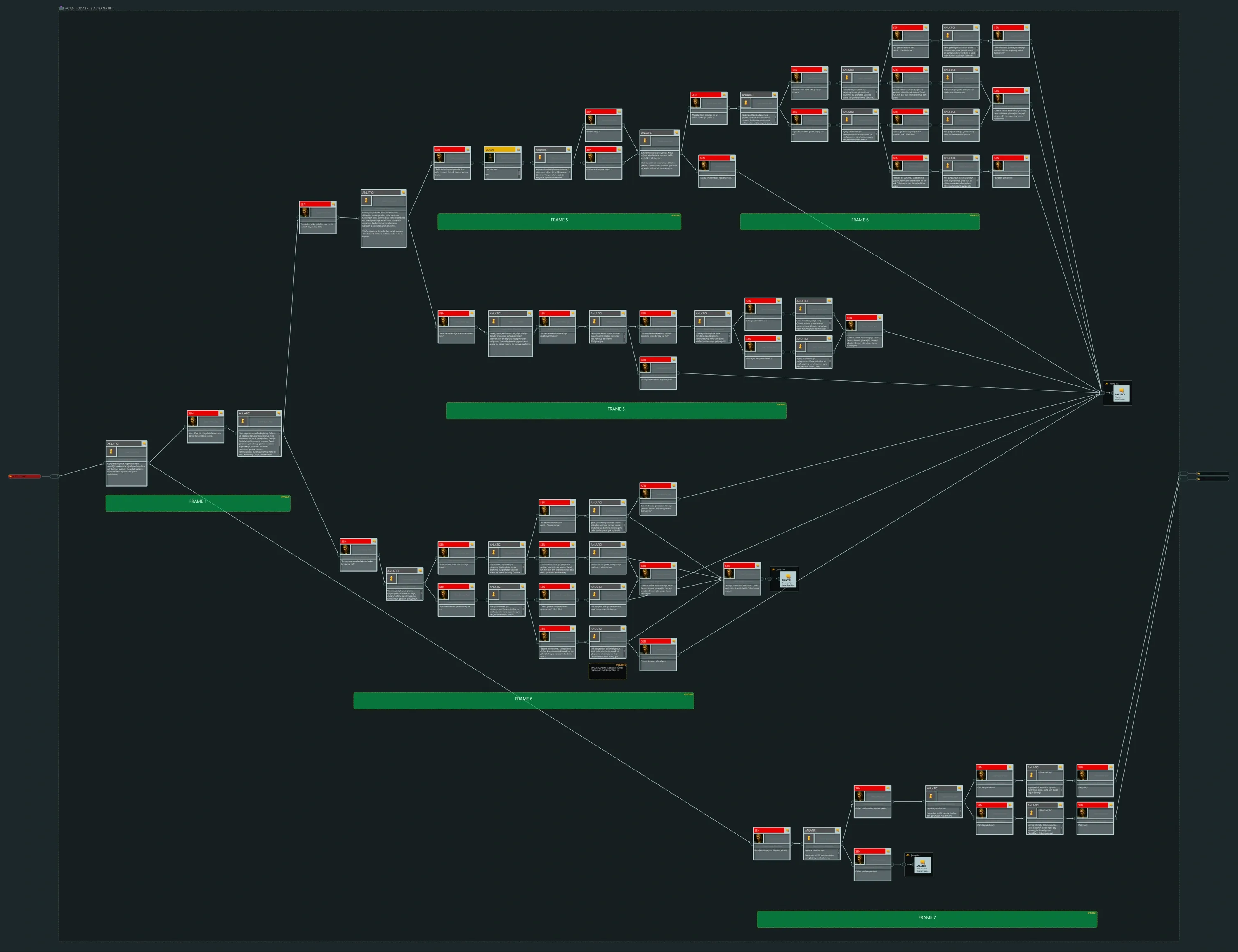 Room 2, alternative B: after Room 3
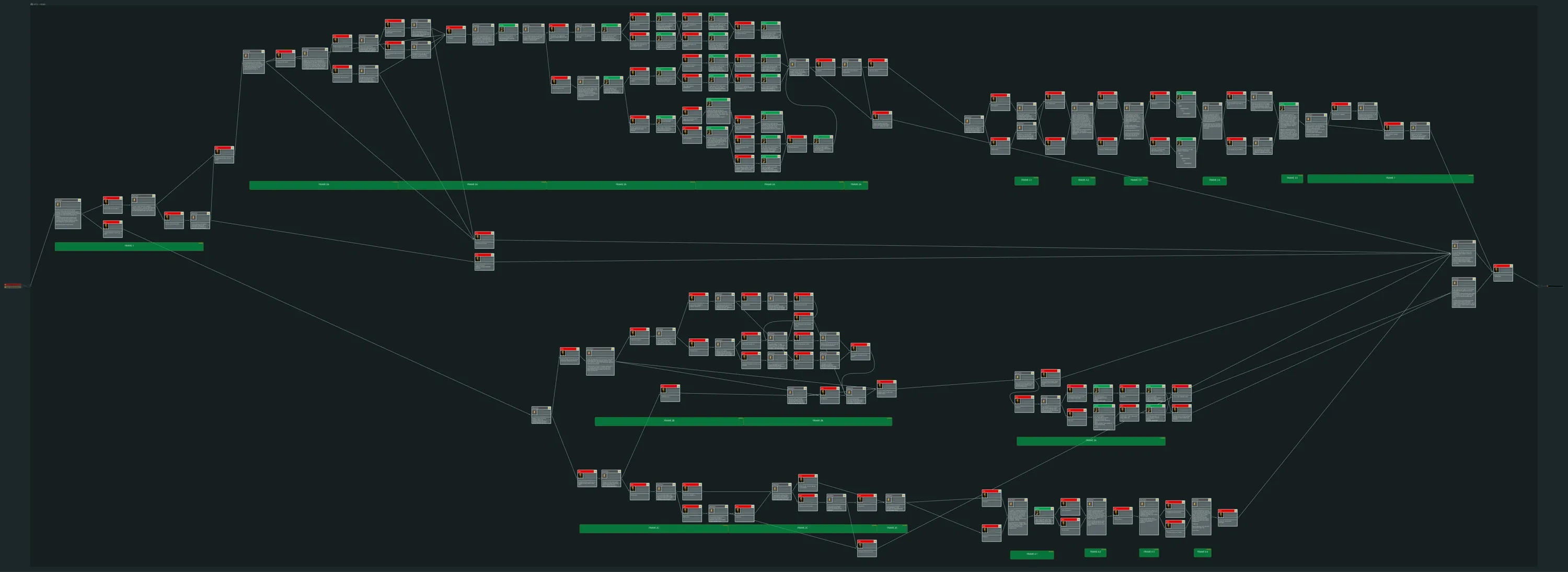 Room 6: Lilith’s paintings
 Room 8: Keenan
 Room 7: the zombies
 Room 4: the white room
 Room 5: Leigea
 The end: the silent epilogue

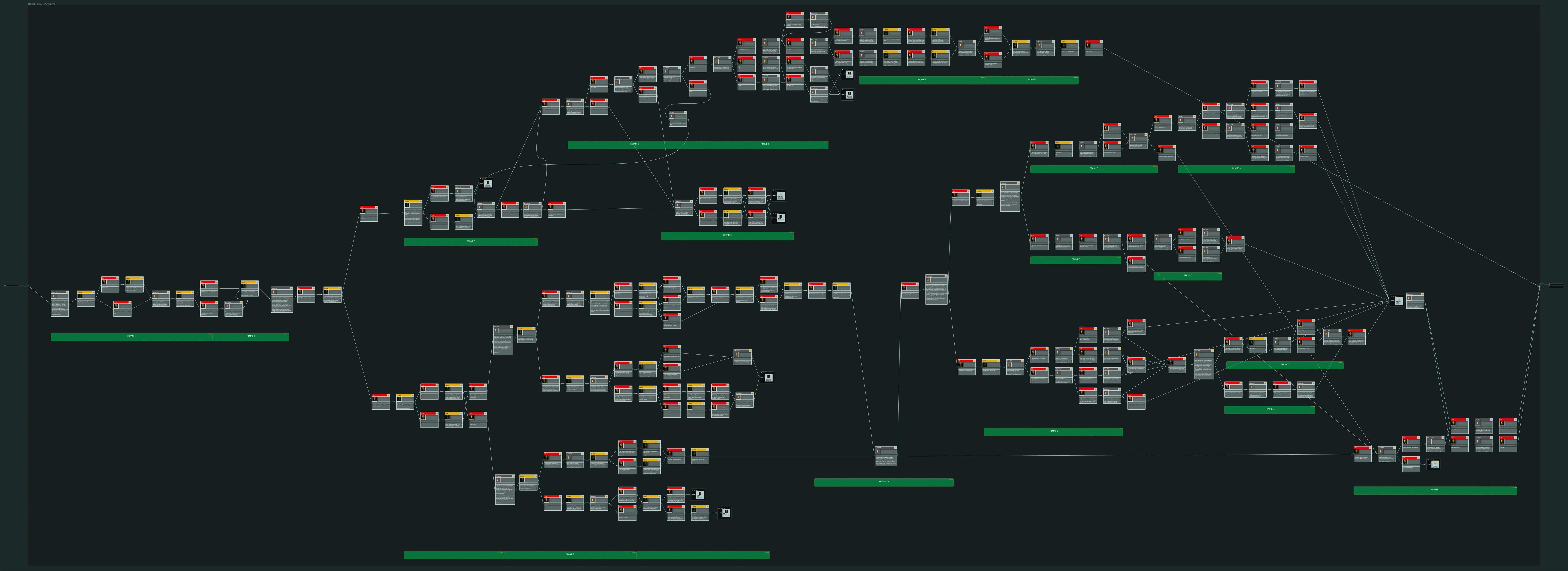

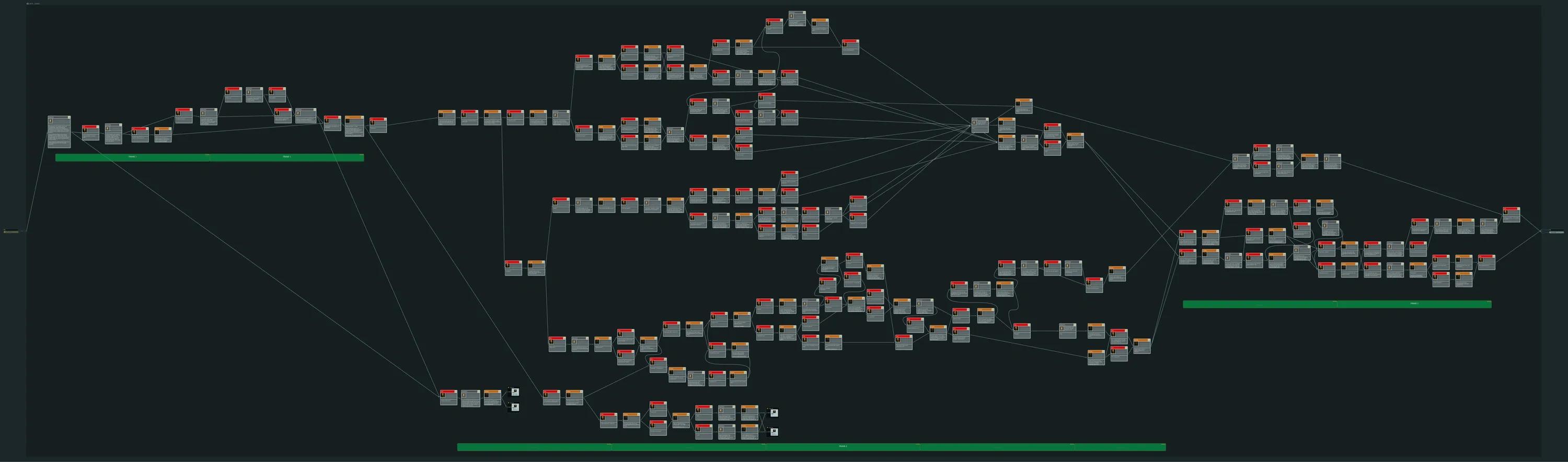
Act 3 reads earlier story state to resolve the endings.
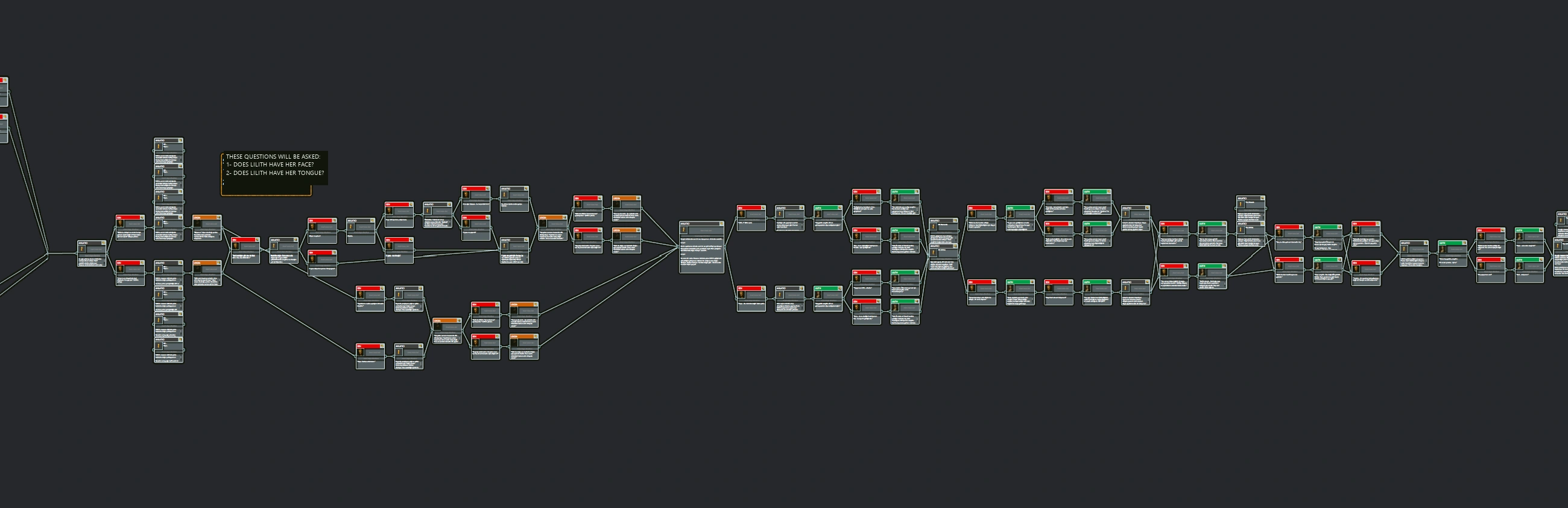
Act 3 opens in a corrupted version of the house. The player settles Keenan’s and Clara’s stories, Lilith wakes, and the player chooses to see the truth or remember the past. Each side ends in three ways, and all six endings cut to black.
Two global flags carry the result of the first half into the second. Instruction nodes set them, and condition nodes read them when Lilith wakes.
LilithStatus.lilithTongue // set in Keenan's resolution
LilithStatus.lilithFace // set in Clara's resolution
// both are checked when Lilith awakens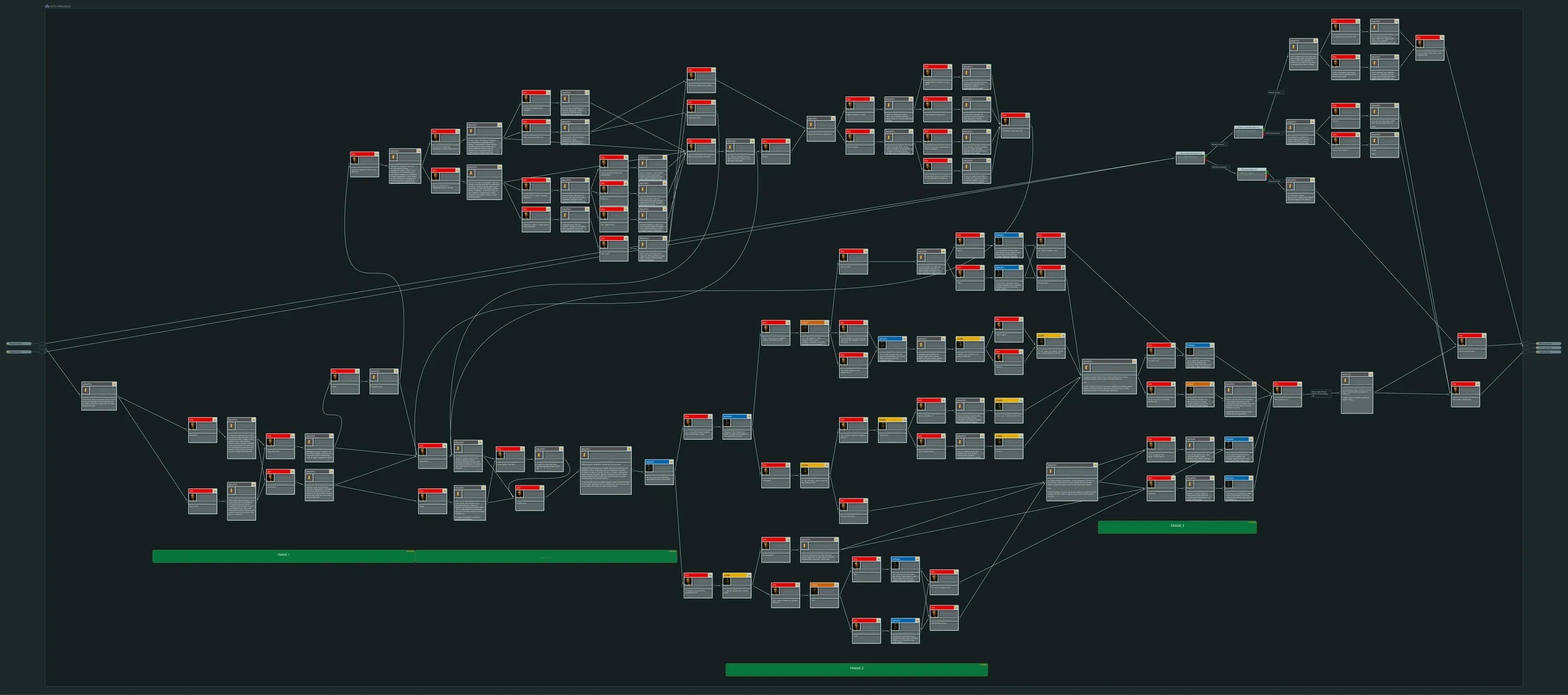 Prologue
 Keenan’s resolution
 Clara’s resolution
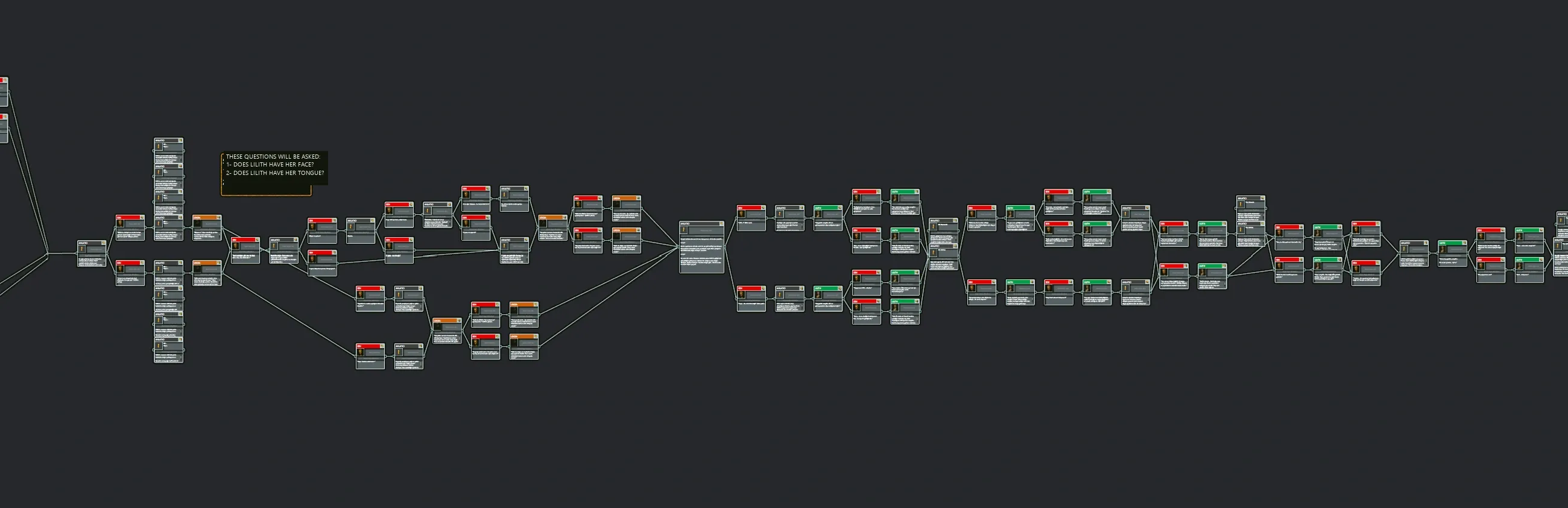 Lilith awakens: the pinned note asks whether Lilith has her face and her tongue
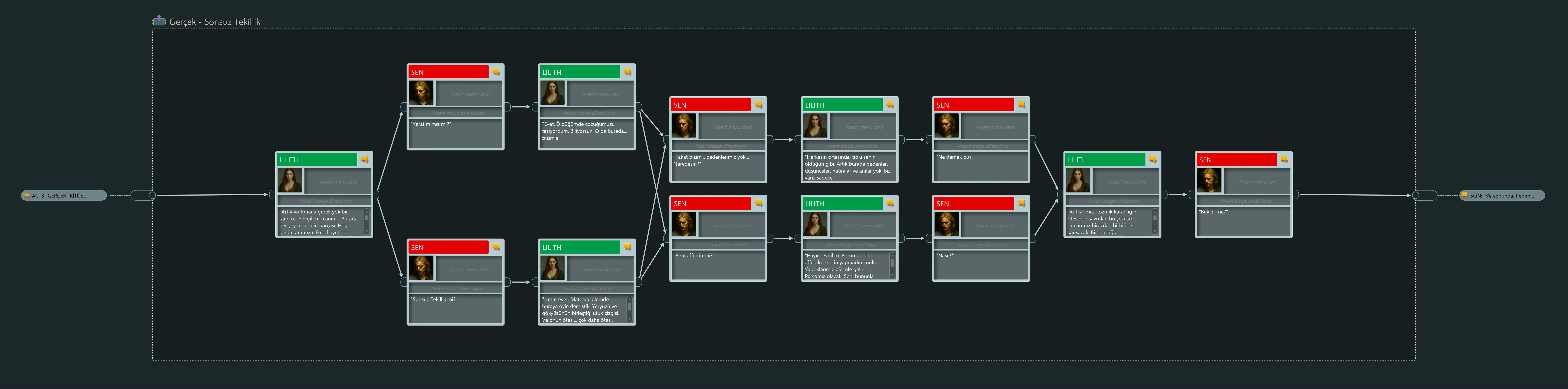
 Truth: the ritual
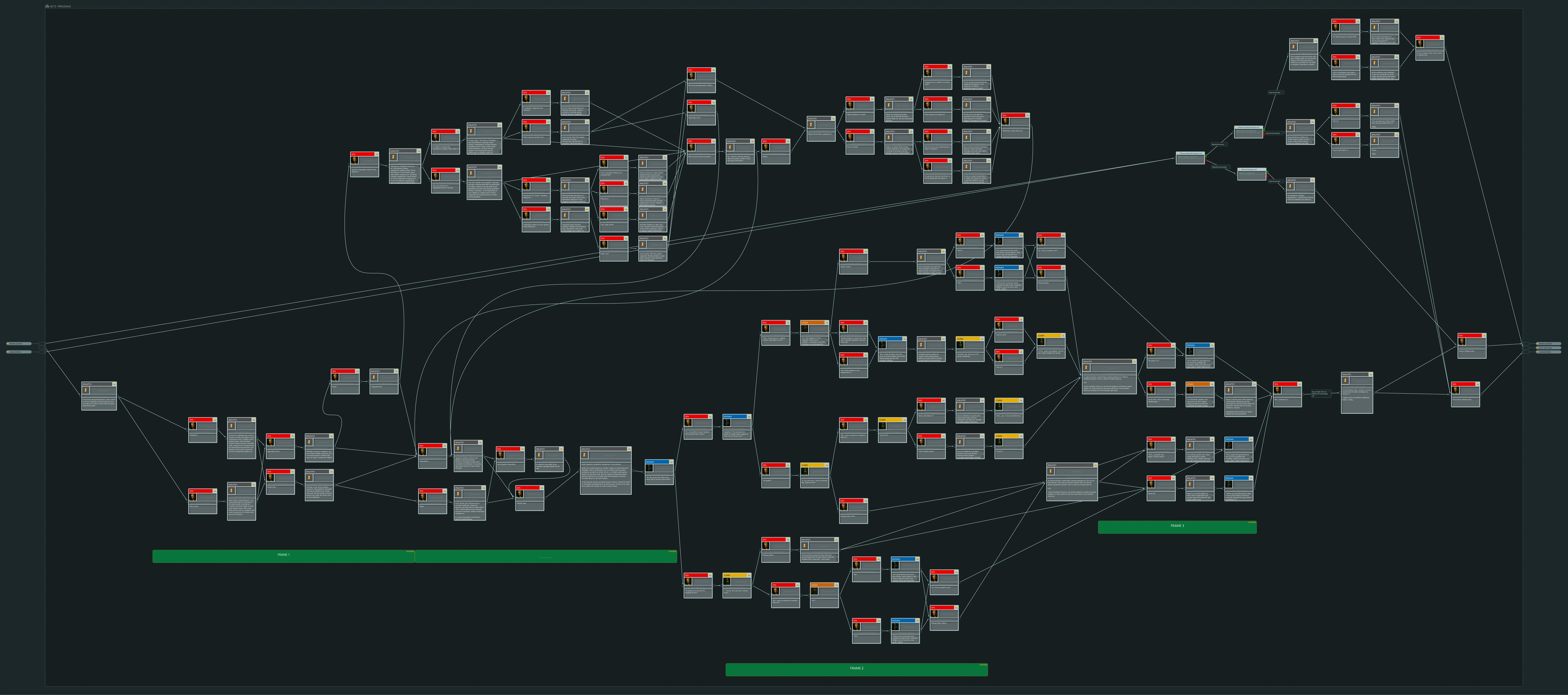

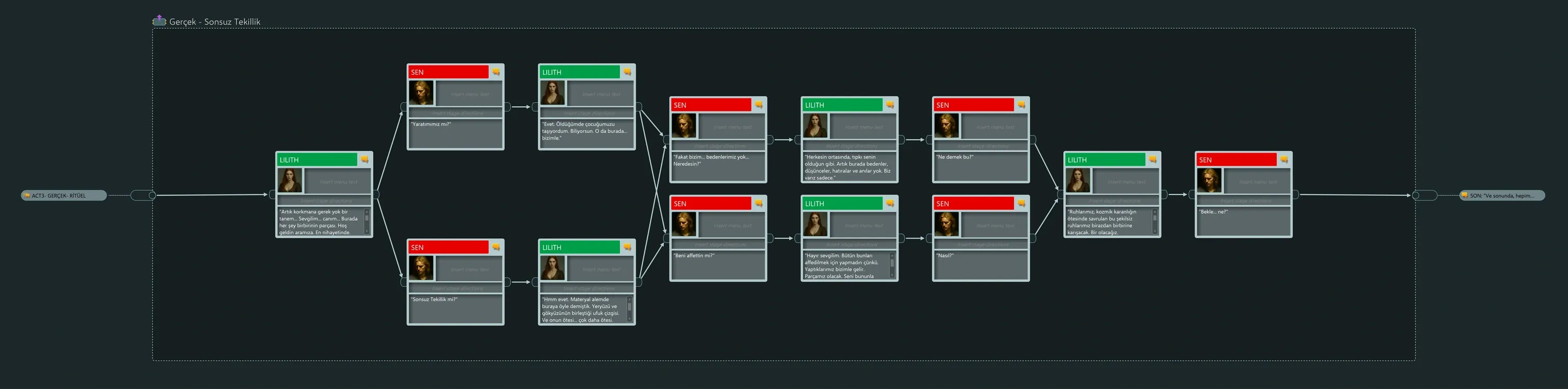 Truth: Endless singularity
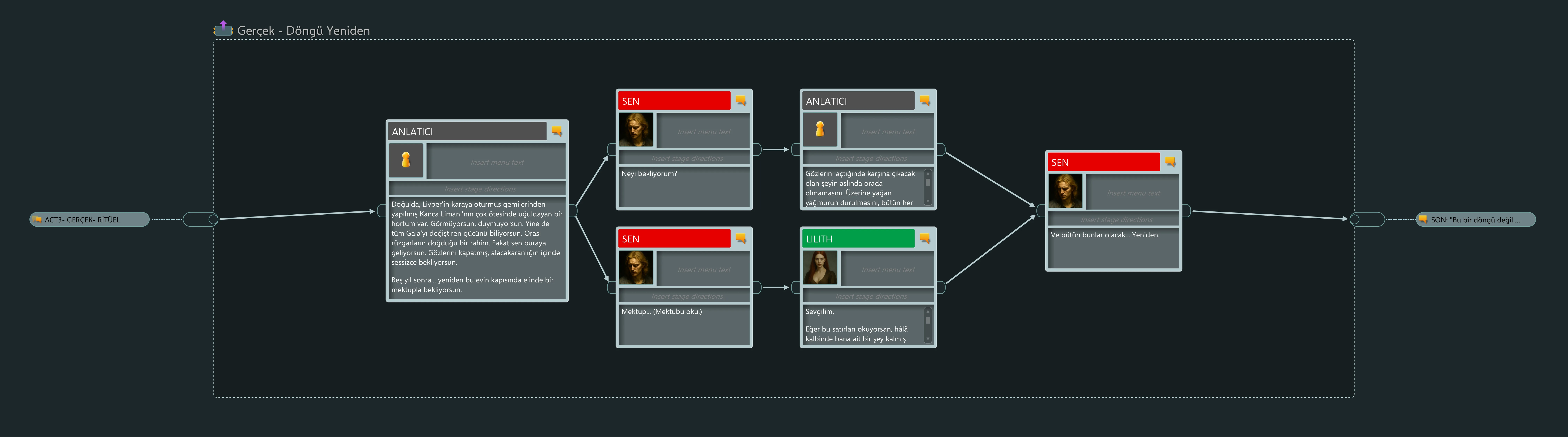
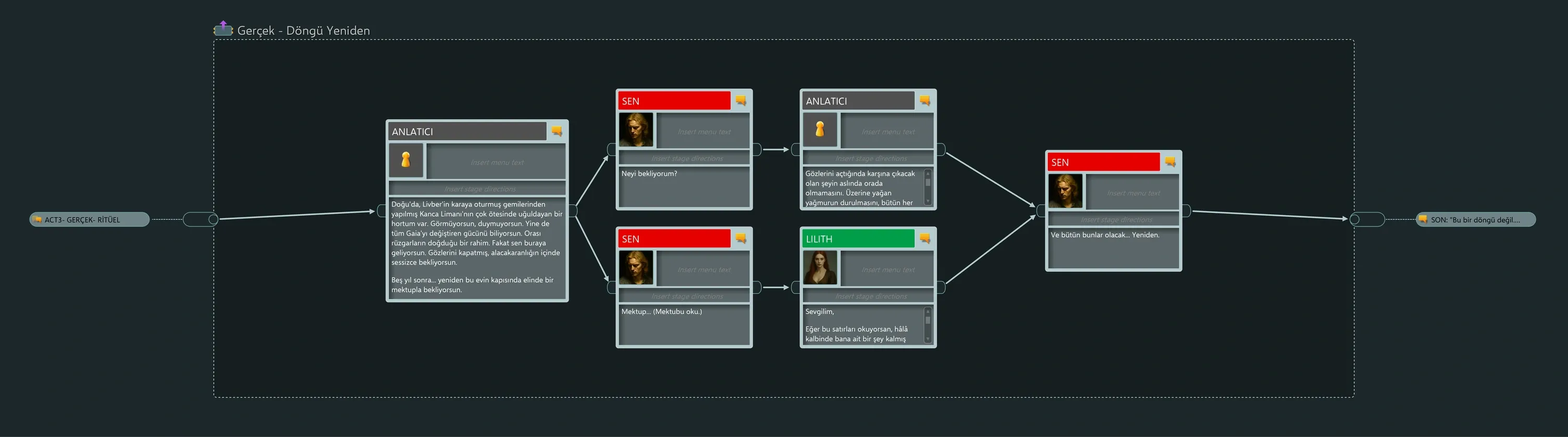 The loop again (truth and past)
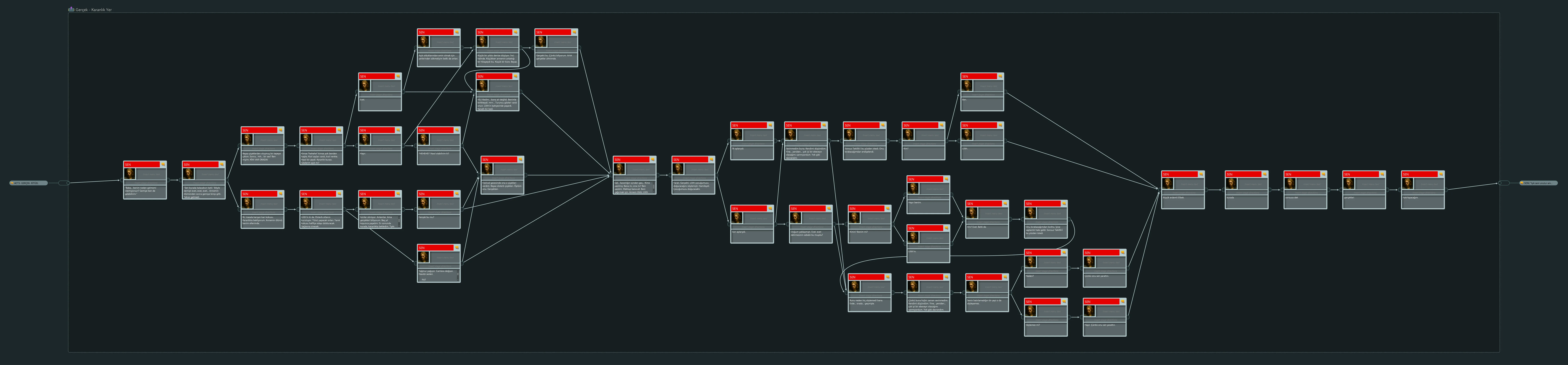
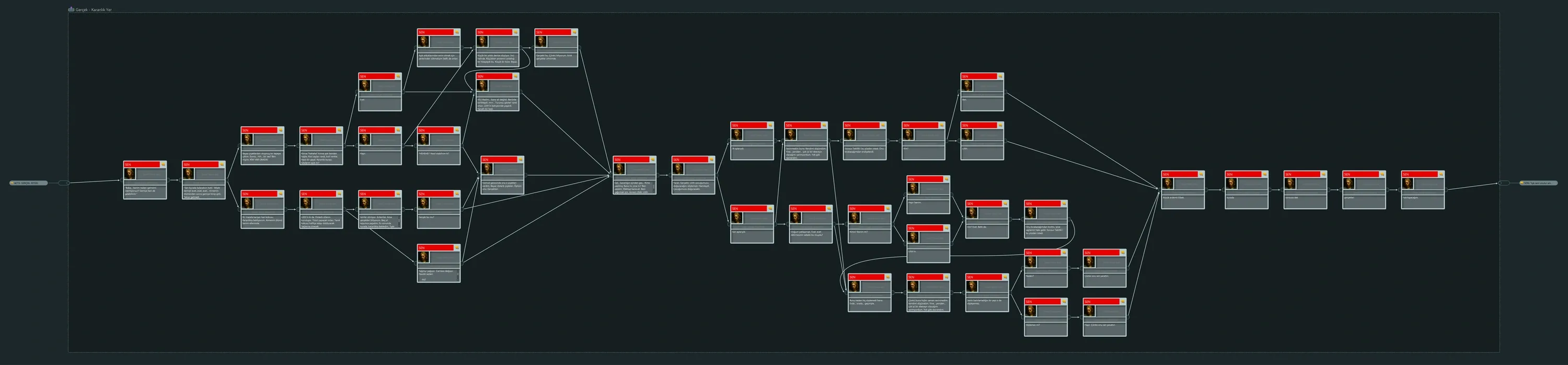 Truth: The dark place
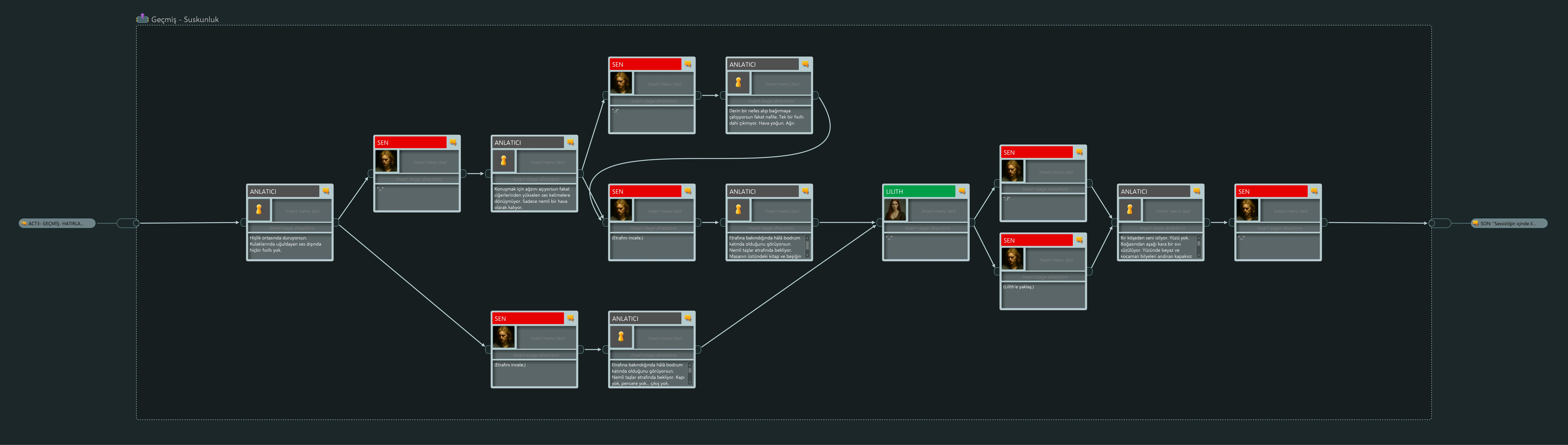
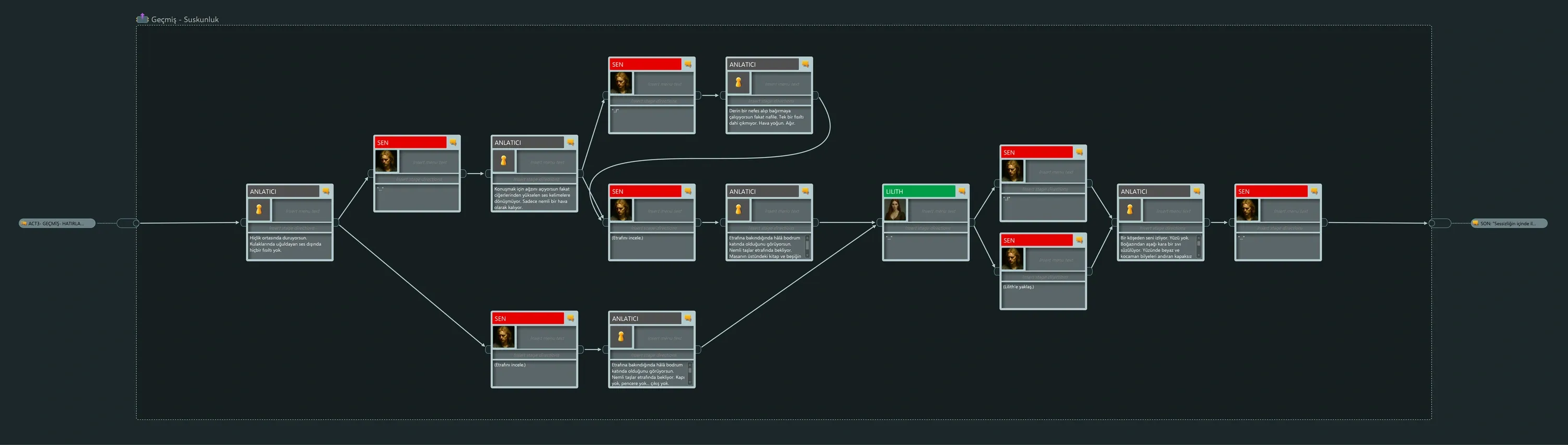 Past: Silence
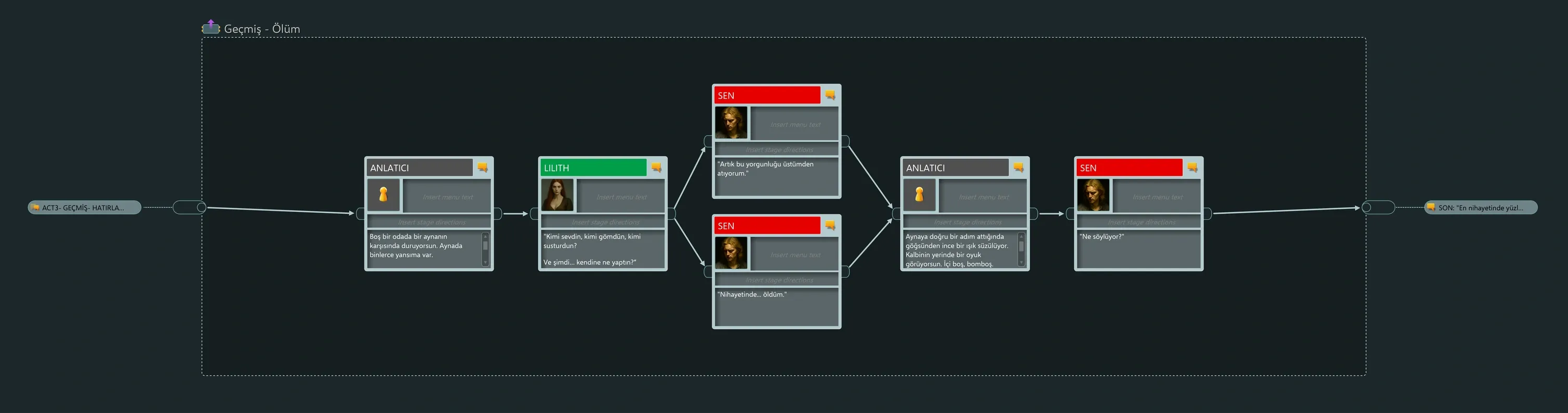 Past: Death
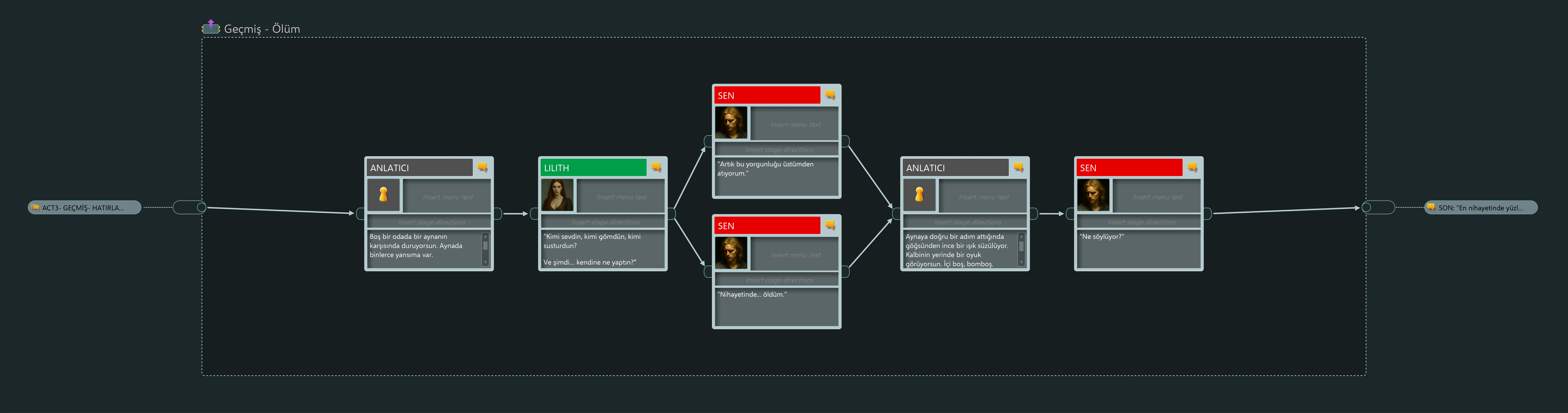
The project groups dialogue, characters and story state.
- One flow fragment per scene, nested inside one per act, so the top level of each act reads like the scene list on the paper storyboard.
- Frame comments (FRAME 1, FRAME 2A, FRAME 2B…) group the dialogue by storyboard frame. Alternate frames get letters, so the art team can see which lines play over which picture.
- Speakers are entities (the player, the Narrator, Lilith, Keenan, Clara, Leigea, Yel and more), so every dialogue node shows who is talking, with a portrait where the character has one.
- Story state is held in global variables. Two flags,
LilithStatus.lilithFaceandLilithStatus.lilithTongue, are set in Act 3 by instruction nodes and read by condition nodes. - Articy IDs travel with the plan: every section on the Miro board lists the IDs of its nodes, so the board and the project point at each other.
- Review notes stay in the project. Dated comments and reminders sit next to the nodes they are about, like the note under Room 4 in Act 2.