A brief insight into the narrative design of Kardiya
My first devlog for the game, written for its first public update and lightly edited here. It sets out the acts and the Node System. Some plans have changed since. The case study shows the game as it is built now.
Welcome to Gaia, a brand-new world on the edge of microcosm. Since this is our first update, allow me to introduce myself briefly. I’m Oğuzhan Açıkalın, the writer of Kardiya: The Winds of Fate. Beyond conventional and classic narrative writing, I also create interactive fiction, hypertext, and cybertext-based stories.
Kardiya is a project we’ve been passionately working on for a long time. It has evolved into something deeper, richer, and more complex than we ever imagined. Much like all of us, the İnsan Evreni grows and transforms along the way, and I couldn’t be happier to witness it.
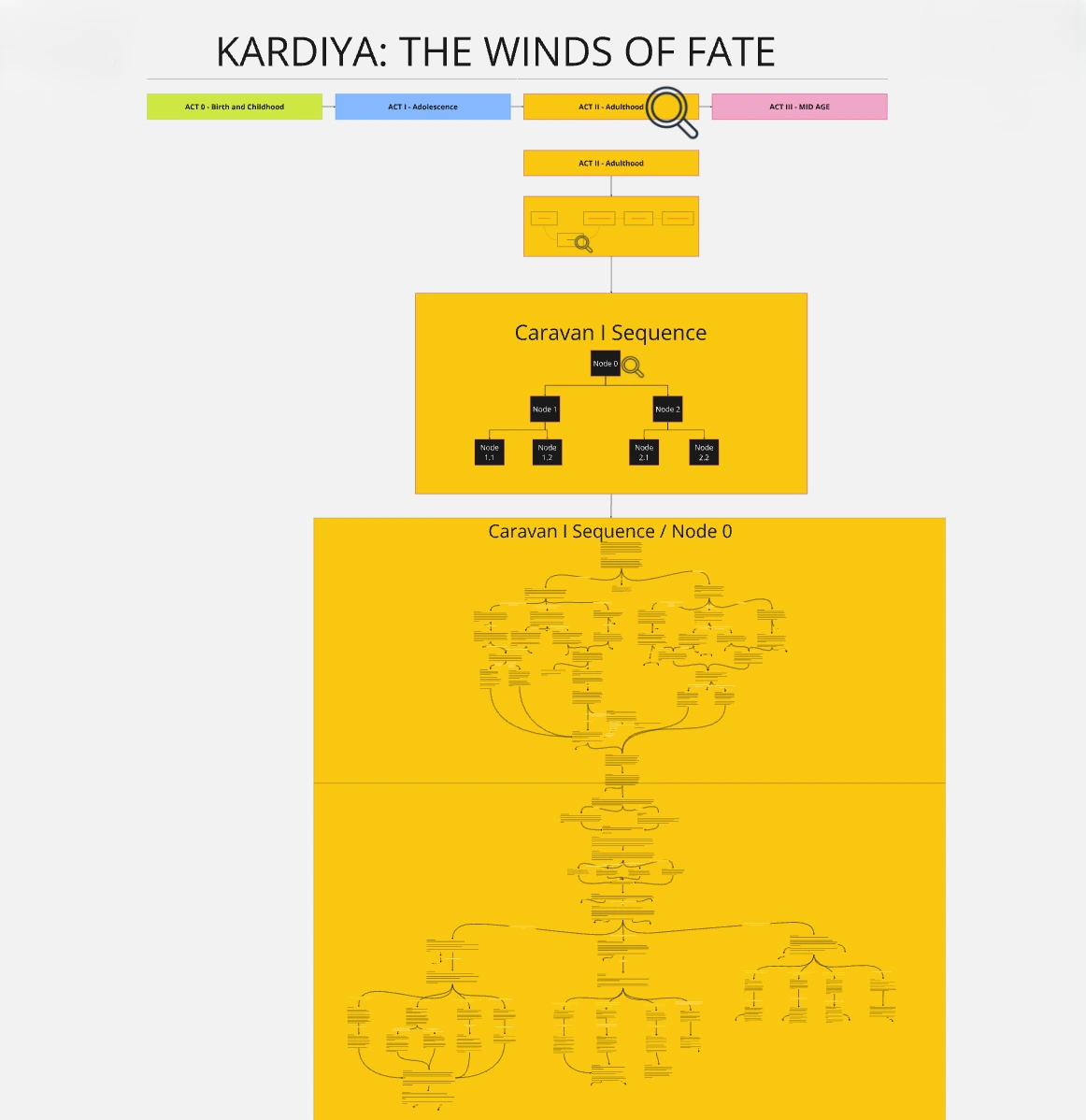
The demo version, which you can play for free on Patreon and Itch.io, is just a small slice of the larger structure. We aim for the game to feature four acts, each representing a pivotal period in the protagonist’s life. In the act zero, you’ll explore the grandeur of Atroven City, where the protagonist was born and raised. This part will be a tutorial to orient you to our new world. After a devastating event forces them into exile, the first act will introduce the harsh plains of Kardiya and the struggles of life beyond noble privileges. The second act dives into Kardiya’s cultural intricacies, showcasing how its societal structure is intertwined with magical forces. Finally, the third act unfolds the weight of history, with the protagonist shaping not only Kardiya’s fate but the destiny of the entire planet.
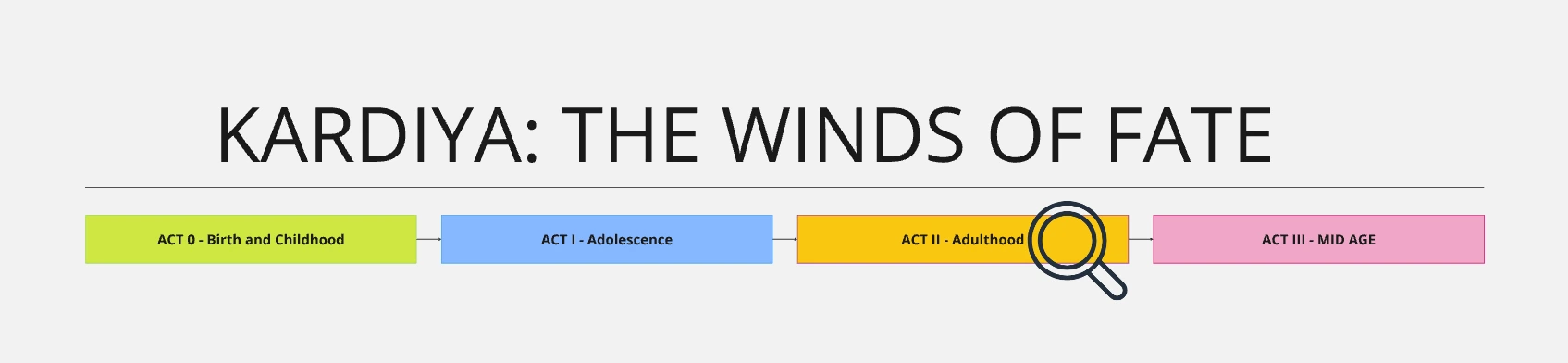
While our game embraces an interactive narrative style, we felt that using a branching structure within each act wouldn't quite fit. Instead, each act flows linearly, allowing us to highlight how players, even when taking the same path, can embark on entirely different adventures based on the choices they make within each sequence. With this in mind, what sets our game apart from other interactive stories is the Node System, which allows you to deeply feel the impact of every decision you make.
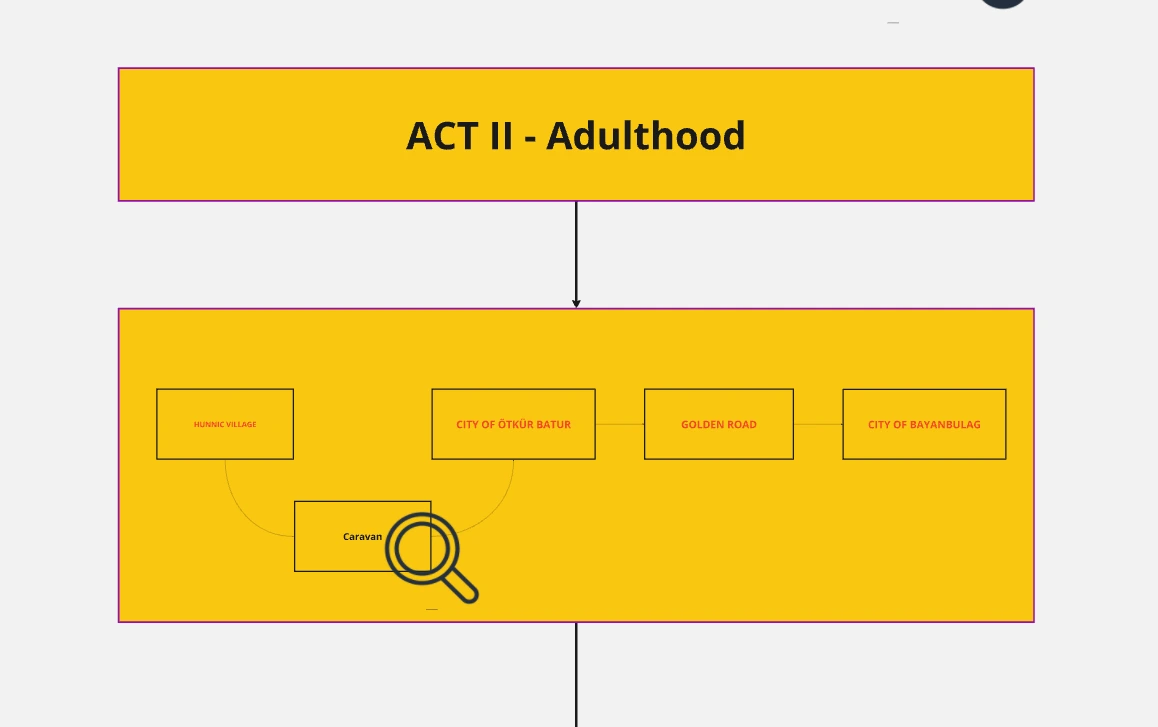
For example, the branching structure of the second act is depicted below:
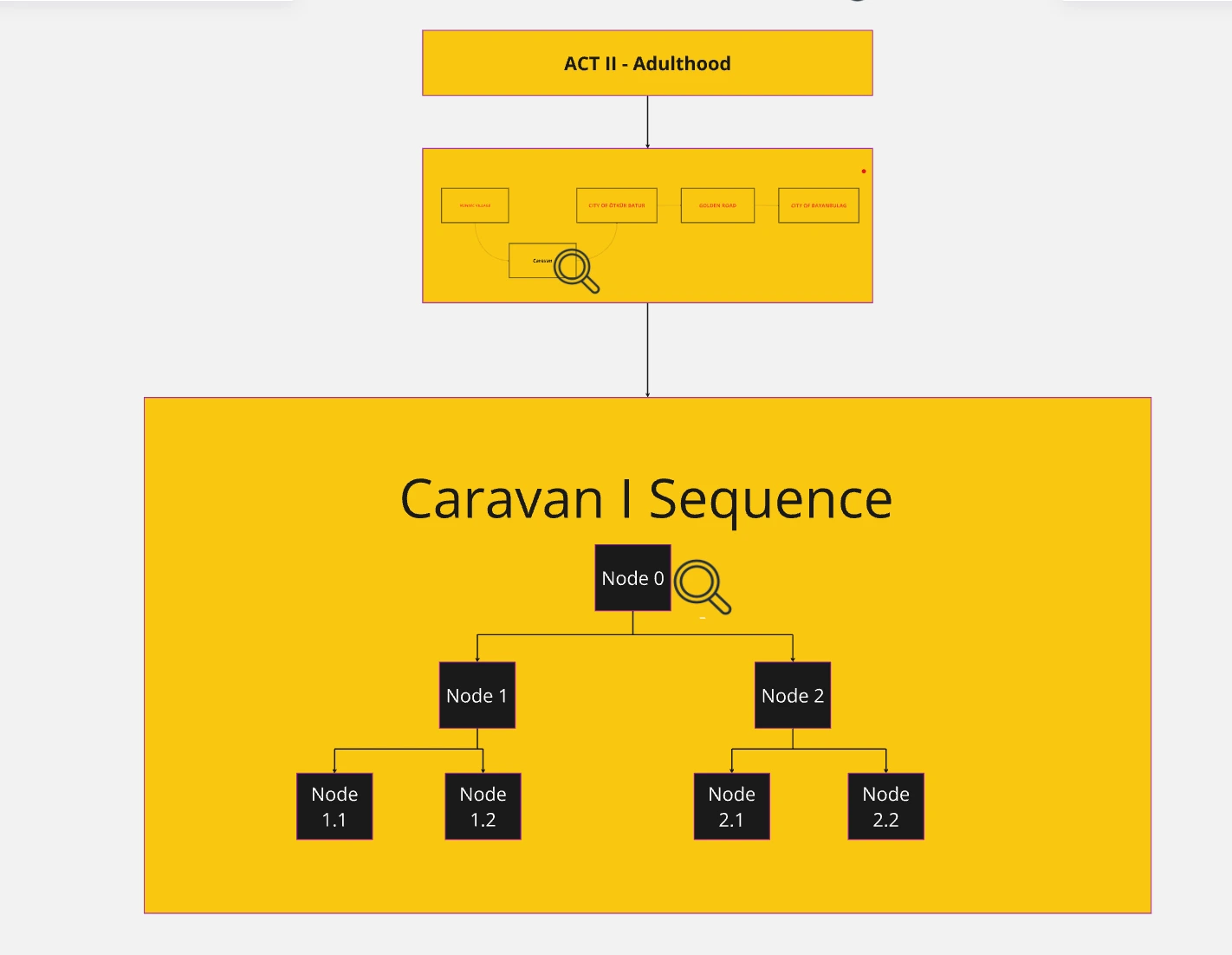
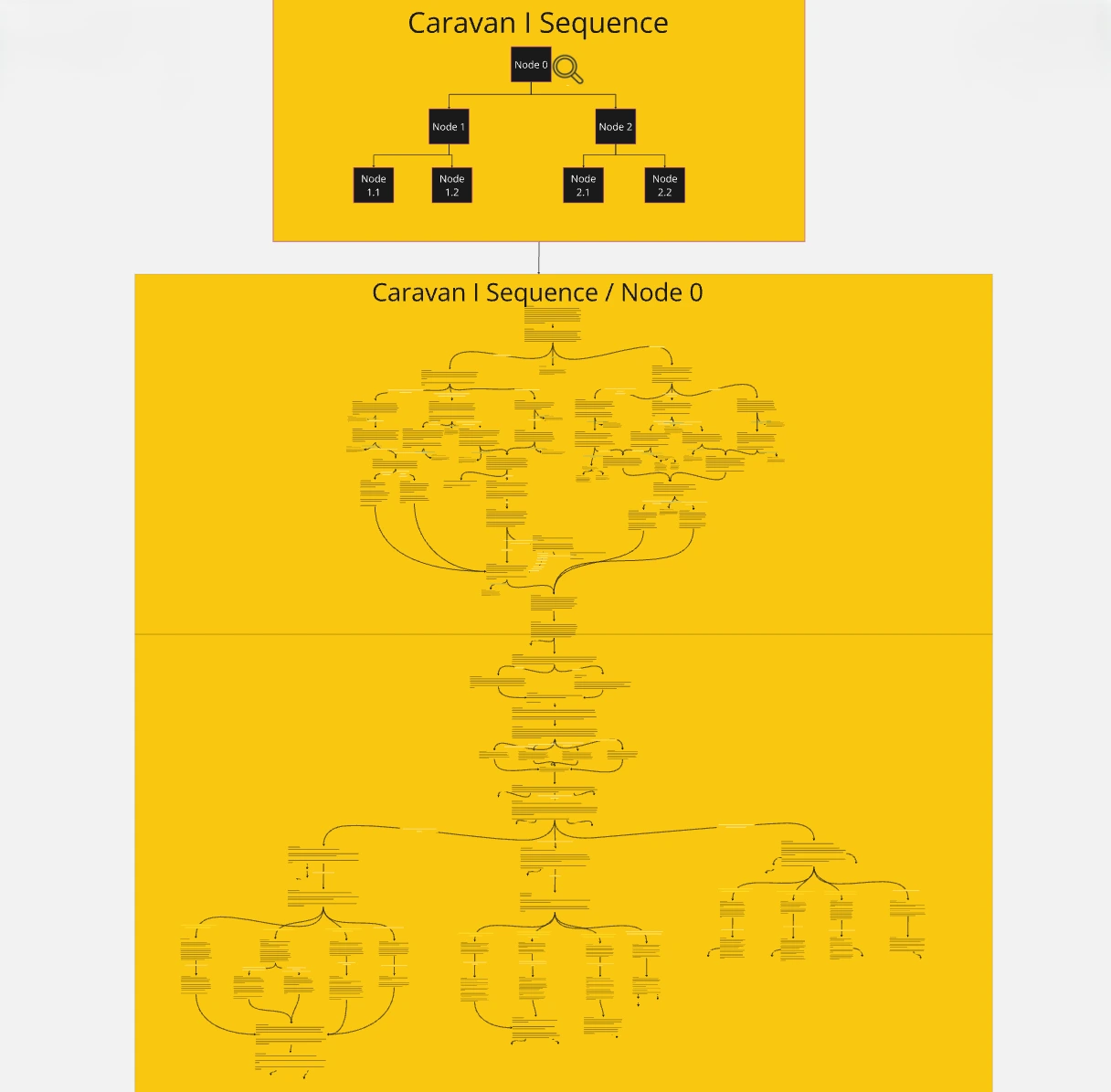
But the Node System goes beyond sequence’s linear flow. Within each sequence, nodes further branch out, allowing players to create truly personalized experiences. Let’s take a closer look at the“Caravan I” sequence as an example:
The text parts of our game take place within these nodes. However, in addition to these branches, we have also taken care to create choices within the nodes that you can choose and develop your character according to your specific orientation in the skill tree (Intelligence, Physical, Social). In this way, we aimed to deepen the role-playing experience. The detailed view of the Caravan I / Node 0 structure is shown below:
Below you can see a visualisation of the branching system of our game.